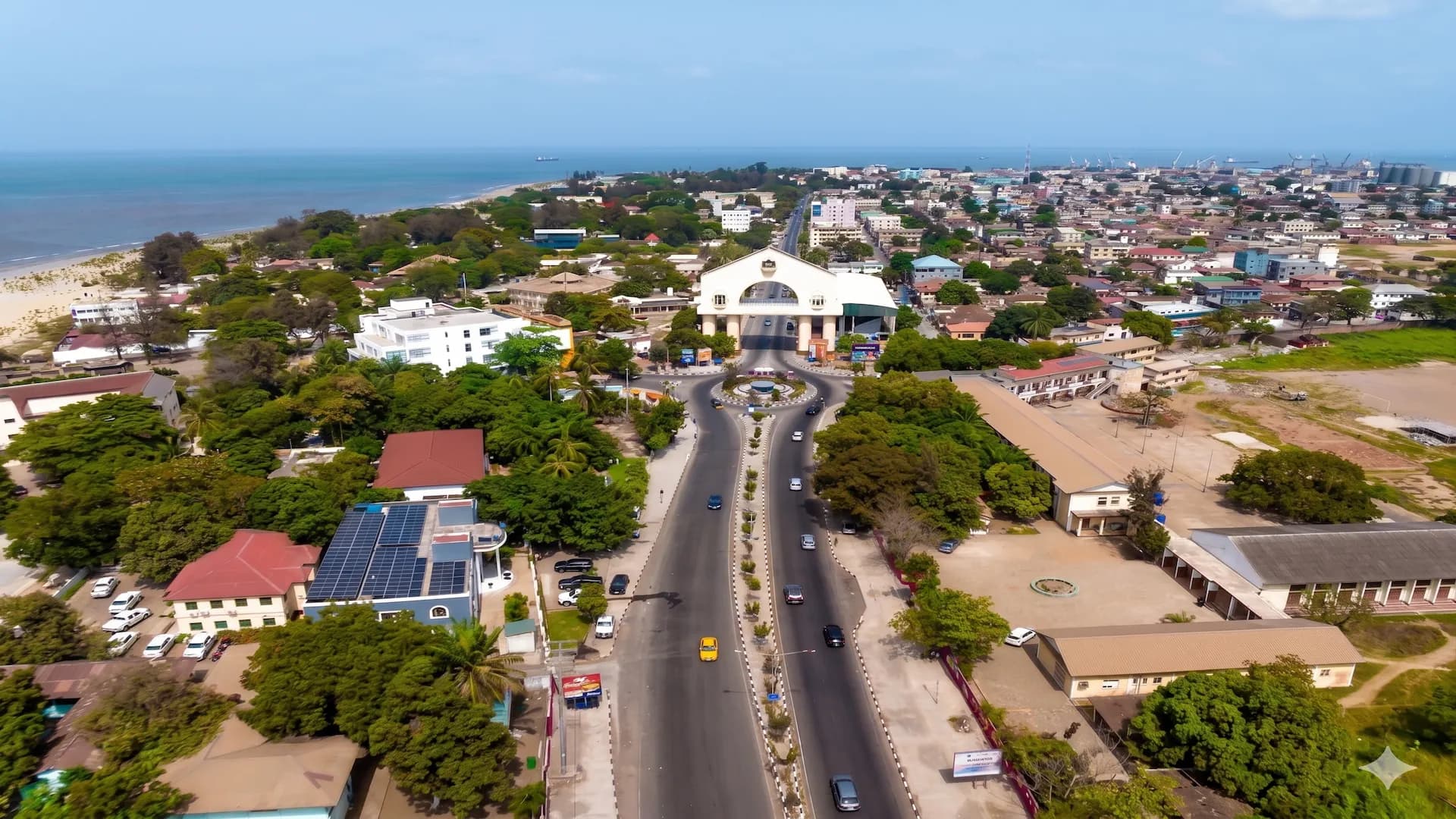
Banjul barely feels like a capital. It sits on a small island at the mouth of the River Gambia, joined to the mainland by a single bridge, and with around 30,000 people you can cover it on foot in half a day.
What to see
Albert Market is the centre of everything: three sections selling cassava, smoked fish and tie-dye cloth, and not much aimed at tourists. Come in the morning, when the fish stalls are going hardest. Arch 22 — the 35-metre arch on Independence Drive — is climbable, and the view over the rooftops to the river is worth the stairs.
The Gambian National Museum, also on Independence Drive, is small but worth an hour, with good sections on the slave trade, the colonial years, and Mandinka and Wolof culture.
Practical tips
The one bridge into town clogs up between 7–9am and 5–7pm, so if you're driving, don't arrive in the thick of it. Most people stay out at Kololi or Bakau and come in for half a day — which is about right.