Affiliate disclosure: This guide contains booking links. If you use them we earn a small commission at no cost to you.
Casamance Travel Guide: Cap Skirring, Ziguinchor and the Diola South
South of The Gambia, cut off from northern Senegal by the River Casamance and a low band of forest, Casamance feels like a different country. Green where the north is dry, Diola where the north is Wolof, part-Christian where the north is mostly Muslim, drinking palm wine where the north drinks bissap. Cap Skirring has the best beach in Senegal. Give it 4–5 days minimum, and fly rather than drive.
Quick facts
- Capital: Ziguinchor
- Main beach: Cap Skirring (25 km from Ziguinchor)
- Best months: November–April (dry season)
- Getting there: Air Senegal from Dakar (~1 hour) or the overnight ferry (~16 hours)
- FCDO advice: Check before travel — the long-running Casamance separatist conflict has been largely peaceful since around 2014, but things can change. Cap Skirring and Ziguinchor are routinely visited.
Why Casamance
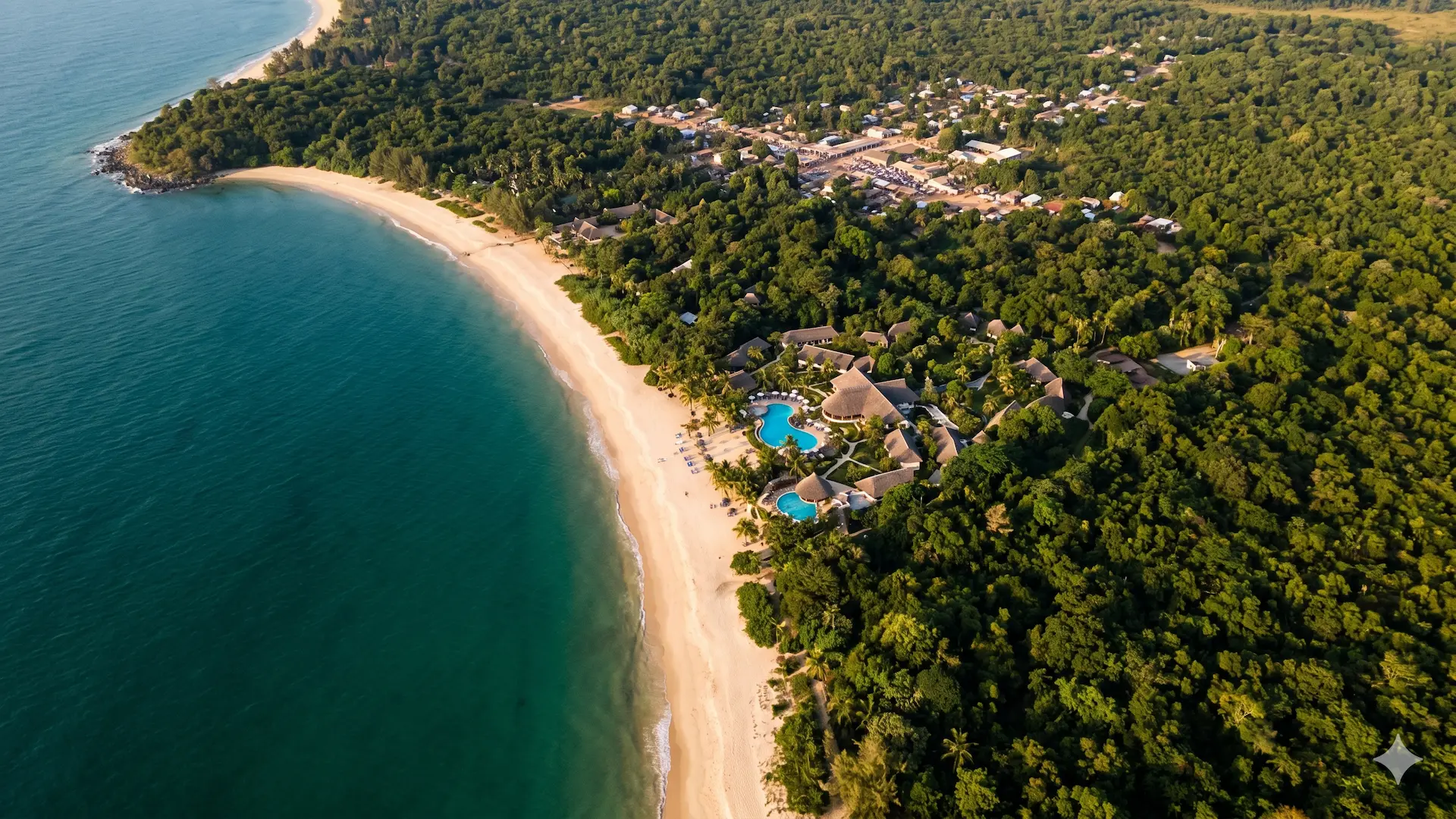
Cap Skirring beach is wider, calmer and better for swimming than anything on the Petite Côte. Backed by casuarinas and fishing villages, it still feels like a beach rather than a resort.
Diola culture is genuinely distinct — animist traditions sit alongside Islam and Christianity, women hold more public economic authority, and palm wine is woven into social life in a way it isn't anywhere north of The Gambia.
The forest — Casamance is noticeably greener than the north: oil-palm forest, mangrove channels and rice paddies, a landscape closer to Guinea-Bissau than to the Sahel.
Getting there
By air
Air Senegal flies Dakar (DSS)–Cap Skirring (CSK) when the route is running — about 1 hour, £80–140 each way. Easily the most practical option for a trip under two weeks. Book as early as you can; it fills quickly.
By ferry
The MV Aline Sitoé Diatta sails Dakar–Ziguinchor twice a week, leaving Dakar in the evening and arriving the next morning (~16 hours). Cabins range from basic dormitory to private double; an upper-deck cabin at night is genuinely pleasant. Fares XOF 14,000–35,000 (£18–45) by class. The boat is old — check it's running before you build a trip around it.
By road
Dakar to Ziguinchor is 600+ km:
- Via Tambacounda (inland): ~12 hours
- Via The Gambia (Barra ferry, then the trans-Gambia road): ~8–9 hours, but Gambian border waits add uncertainty
Neither is recommended for a standard tourist trip unless you've a specific reason.
Ziguinchor
The regional capital is a pleasant, manageable city of ~200,000. Marché Saint-Maur is worth a morning for crafts, fresh produce and a bit of local context. The Forêt de Kabrousse just outside town has impressive kapok trees.
Where to stay: Hotel le Flamboyant (mid-range, colonial-era, riverside) and Hotel Kadiandoumagne (budget, central) are the established options. Most travellers push on to Cap Skirring the same day.
Cap Skirring
25 km west of Ziguinchor, Cap Skirring is the destination. The beach — casuarinas behind, low dunes at the edge, 5+ km long — is the longest and most swimmable in Senegal, and the Atlantic is calmer here than at Dakar or Saly.
Village life carries on alongside the tourist strip: fishermen land on the same beach in the morning, women sell oysters at the market.
What to do
Beach — swim, walk, sit. Cap Skirring's beach doesn't need much organising.
Diola villages — several within 10 km (Kabrousse, Mlomp, Oussouye) keep traditional roundhouses (cases à impluvium) and sacred forests. Go with a local guide — these sites carry cultural weight and visits should be arranged properly and respectfully.
Kayaking — the mangrove channels south of Cap Skirring are best by kayak; several lodges run half-day paddles through the waterways. Casamance kayaking tours on Viator
Palm wine villages — your guide can set up a visit to a local cabane (palm-wine tap room), a Diola social ritual worth experiencing.
Where to stay at Cap Skirring
Budget (£35–60):
- Campement Elinkine or local guesthouses — basic, with character and local food
Mid-range (£70–140):
- Le Kabrousse — reliable mid-range hotel, pool, good food, beachside
- Les Palmiers de Cap Skirring — French-run, quiet garden, 200m from the beach
Boutique (£120–200+):
- Carabane Island Lodge — reached by pirogue, small and lovely
Practical notes
Currency: CFA franc (Senegal) — if you're coming via The Gambia, make sure you have XOF, not GMD.
Language: French and Diola; limited English outside tourist hotels.
Health: Malaria risk is higher here than in the north, especially in the green season. Prophylaxis is essential.
Mobile: Orange and Free both have 4G in Ziguinchor and Cap Skirring; patchier in rural areas.
Sample 4-day itinerary
Day 1: Fly Dakar–Cap Skirring. Afternoon on the beach. Dinner at the hotel.
Day 2: Morning kayak in the mangroves. Afternoon village visit (Kabrousse or Mlomp with a local guide).
Day 3: Ziguinchor day trip — Marché Saint-Maur, Forêt de Kabrousse, lunch in town. Back to Cap Skirring for sunset.
Day 4: Morning on the beach, fly Cap Skirring–Dakar in the afternoon.
FAQ
Is Casamance safe to visit?
It's been largely peaceful since around 2014, and the tourist areas (Cap Skirring, Ziguinchor) are routinely visited by independent travellers. The FCDO sometimes advises caution in specific border zones. Check the current advice before booking and again in the week you travel.
Do I need a guide in Casamance?
For beach days, no. For village visits, sacred forests and palm-wine ceremonies, yes — and strongly recommended. These places have active cultural significance and an introduction matters.
Can I enter Casamance from The Gambia?
Yes — the Seleti crossing leads into the region, and it's the overland route many trans-Gambia travellers use. Check FCDO advice for that border zone.
Senegal beyond Casamance? Read the full Senegal holidays guide for itineraries, Saint-Louis, the Sine-Saloum Delta and Dakar.