Affiliate disclosure: This guide contains booking links to Booking.com and Viator. If you book through them we earn a small commission at no extra cost to you. We only recommend places and operators we'd happily send a friend to.
Senegal Holidays: The Complete 2026 Planning Guide
A young man with a wheelbarrow of grilled thiof crosses Plage de Yoff in front of a wall of fishing pirogues. It's 7 am and the boats are coming in: hulls painted orange, blue and green, prows carved with verses from the Quran. Two women in head-to-toe boubous walk past a Land Cruiser playing sabar at obscene volume. This is a Tuesday morning in February in Dakar — a city that sounds, smells and behaves nothing like the West African brochures suggest.
This Senegal holidays guide is for UK and European travellers who want a country, not a resort. Senegal is bigger, denser and more culturally serious than its neighbour The Gambia — closer to a Mediterranean trip in cultural ambition than a Canaries beach week. By the end you'll know which two or three regions to combine in a fortnight, what to eat in Dakar, how to get to Saint-Louis without losing a day to bush taxis, and roughly what it'll all cost.
Quick-answer box
- Capital: Dakar (population ~3.4 million)
- Currency: West African CFA franc (XOF), pegged at 655.957 to €1 — roughly 765 XOF to £1
- Flight time from London: ~6 hours direct (when scheduled), 8–10 hours indirect
- Visa: UK citizens — visa-free entry for up to 90 days
- Language: French (official), Wolof (lingua franca), Pulaar, Serer, Diola
- Best months: November to early May (dry season)
- Daily budget (mid-range): £80–130 per person, accommodation included
Why visit Senegal
Six reasons that genuinely separate Senegal from its neighbours — not generic "West Africa" platitudes.
1. Dakar is a real city
Most West African capitals are administrative centres with hotels stacked around them. Dakar is different: a working city of 3.4 million with serious music venues, art galleries (Galerie Le Manège, the renovated Théodore Monod), proper restaurants, fashion designers, a film history (Sembène, Mambéty) and the Dak'Art Biennale every two years. You can spend three days in Dakar without seeing a beach and not feel short-changed. Our Dakar travel guide covers the best neighbourhoods, restaurants and music venues for a two- to four-day stay.
2. Saint-Louis is a destination in its own right
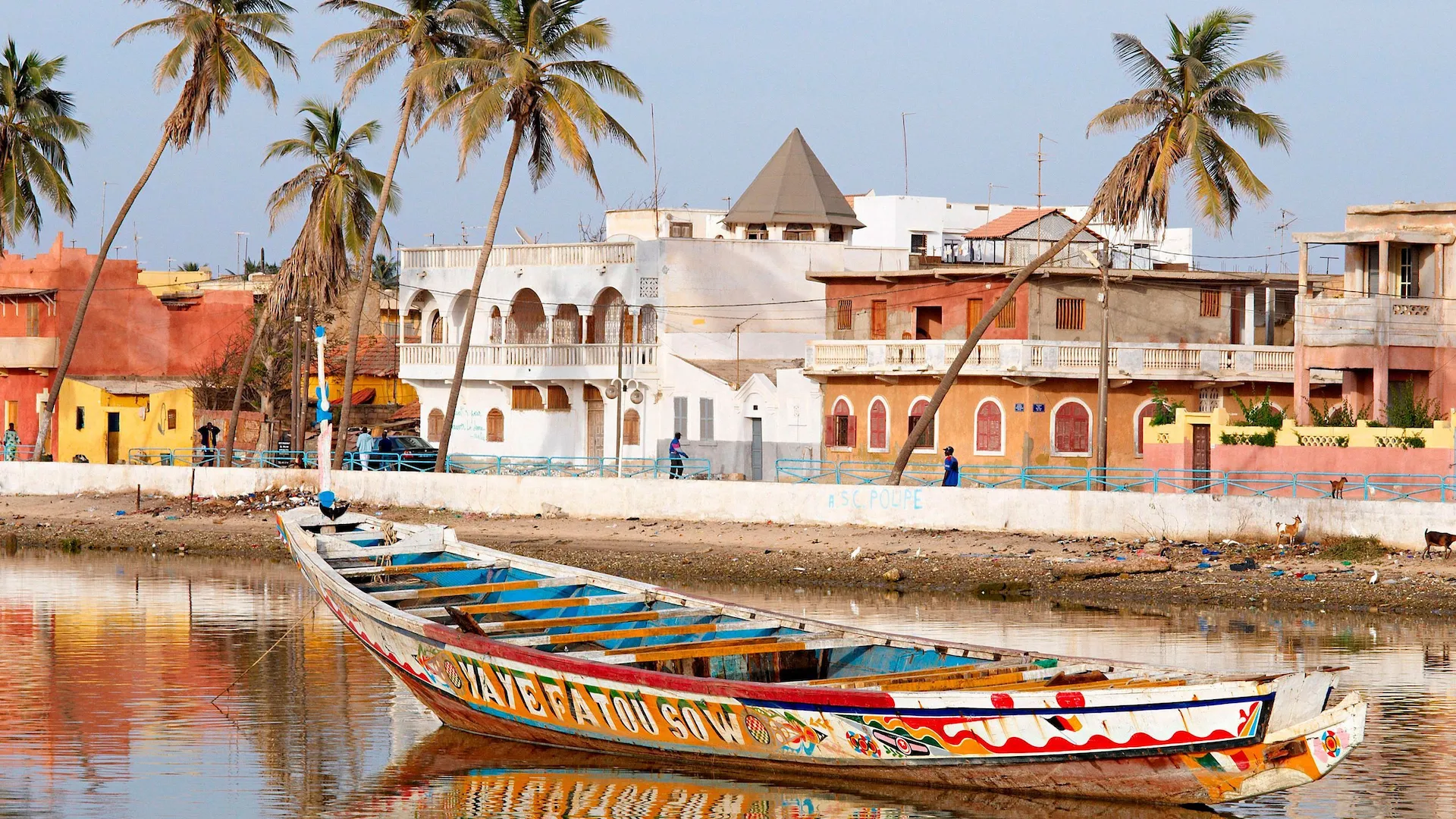
Two hundred miles north of Dakar, on an island in the Senegal River, the former French colonial capital is a UNESCO World Heritage town with peeling pastel facades, horse-drawn caleches and the country's best music festival. The Saint-Louis Jazz Festival every May draws African and European players for four nights of concerts in courtyards, bars and former trading houses. Go for that, or go in February when the town is quiet and you have it to yourself. See our full Saint-Louis Senegal guide for the Jazz Festival, Djoudj day trips and where to stay on the river island.
3. The food is West Africa's most refined
Senegalese cooking is the regional reference cuisine — thiéboudienne, yassa, mafé, dibi, thiou, pastels — and Dakar is the only city in West Africa where you'll find these dishes in proper restaurants alongside their home-cooked versions. If you care about food at all, this is the country.
4. The regions are genuinely distinct
In a fortnight you can combine the Sahel-edge desert at Lompoul, the colonial architecture of Saint-Louis, the mangrove birdlife of the Sine-Saloum Delta, the Atlantic beaches of the Petite Côte, and the green Diola south of Casamance. Few countries this size offer five environments this different.
5. The music heritage keeps producing
Youssou N'Dour, Baaba Maal, Cheikh Lô, Orchestra Baobab — Senegal exports more globally significant musicians per capita than almost anywhere. Mbalax (the rhythm Dakar dances to) is a living genre, and you can hear sabar drumming on the street any weekend night. N'Dour's club, Thiossane, in Sicap Liberté, still has unannounced sets when he's in town.
6. Île de Gorée
A 25-minute ferry from Dakar's port, the small island contains the Maison des Esclaves — the most-visited slave trade memorial in West Africa. Whether or not the specific "Door of No Return" is historically accurate (scholars disagree), the island as a whole is a UNESCO World Heritage Site, the architecture is intact and the place hits hard. Half a day, properly done, with a guide who'll let it land.
Best time to visit Senegal
Same fundamental climate as The Gambia: a long dry season followed by a short, intense rainy season. Within the dry months, your choice depends on whether you want music festivals, cool mornings, or rock-bottom prices.
November–December — the season warms up
Dry, warm (28–31 °C on the coast, hotter inland), pleasant nights. The Atlantic still has some swell. Hotel prices are at shoulder-season levels until mid-December. Magal de Touba (the Mouride pilgrimage to the holy city of Touba) usually falls in late August or September — but if you're travelling in this window, expect transport pressure on the routes east.
January–February — the cool sweet spot
The Harmattan wind from the Sahara cools mornings to 17–20 °C, especially north of Dakar. Daytime is 26–29 °C with low humidity. Photographically the light is hazy on Harmattan days, sharp on others. Prices are moderate; the country is open and active.
March–April — warm, dry, quieter
Temperatures rise into the low 30s. Hotels discount from mid-March. The Atlantic warms enough for proper swimming. Dust eases as the Harmattan weakens.
May — Saint-Louis Jazz, then heat
The Saint-Louis Jazz Festival in mid-May is the cultural highlight of the year. By late May the rains are approaching and humidity climbs. Worth coming for the festival; not the month for a general beach trip.
June–October — wet season
Heavy afternoon storms, humidity above 85%, malaria pressure higher. Most of the tourist economy quietens. The country is at its greenest and birdwatching is excellent for specialists, but logistics get harder and several lodges close for refurbishment.
For the full breakdown including festival dates and flight pricing windows, see our best time to visit Senegal cluster guide.
Getting there from the UK and Europe
Direct flights
The direct flight situation has shifted in recent years and is worth checking on the day you book.
- Vueling has run a seasonal Barcelona–Dakar service
- Air Senegal has operated direct Paris–Dakar and other European routes
- TUI has run seasonal direct charter from UK regional airports in some winters
Flight time from London or Paris is around six hours.
Indirect — the reliable options
- Air France via Paris CDG — multiple daily, the workhorse route
- Brussels Airlines via Brussels — usually the cheapest from London with one stop
- Iberia via Madrid — quick connection, often well priced
- Royal Air Maroc via Casablanca — useful European hubs and adds a stopover option
- TAP Portugal via Lisbon — convenient for evening UK departures
- Turkish Airlines via Istanbul — good service, longer total journey
Typical return fares from London for a two-week January trip:
- Brussels Airlines via Brussels: £450–650
- Air France via CDG: £500–750
- Iberia via Madrid: £480–700
- Royal Air Maroc via Casablanca: £420–600
The airport situation
Blaise Diagne International Airport (DSS), opened December 2017, sits 50 km east of Dakar near Diamniadio. The old Léopold Sédar Senghor airport in central Dakar is closed to commercial traffic. From DSS to central Dakar is a 60–90 minute drive depending on traffic.
The new TER (Train Express Régional) runs from Diamniadio toward central Dakar quickly and cheaply, though the airport itself isn't on the line — you'd take a taxi or shuttle to the Diamniadio station first.
Pre-booked airport transfers run XOF 25,000–40,000 (£32–52). Official airport taxis are similar. Ride-hail apps (Yango, Heetch) work at DSS but pickup zones change — check on the day. Dakar airport transfers on Viator
Where to stay
Senegal is too big for a single base. Most first trips combine two or three regions, with Dakar almost always one of them.
The bases, compared
| Region | Vibe | Best for | Typical price (B&B, double, peak) |
|---|---|---|---|
| Almadies (Dakar) | Coastal Dakar, restaurants, expats | First-timers, urban explorers | £100–180 |
| Plateau (Dakar) | Colonial centre, galleries, ferry port | Culture-led, Gorée day-trippers | £80–150 |
| Ngor (Dakar) | Artsy, surfers, near airport | Stopovers, longer Dakar stays | £60–120 |
| Saly Portudal | Petite Côte resort coast | Beach holiday, families | £80–150 |
| Toubab Dialaw | Cliffside artist village | Couples, writers | £50–100 |
| Saint-Louis | UNESCO old town on a river island | Jazz, photography, walking | £60–130 |
| Sine-Saloum Delta | Mangroves and eco-lodges | Birders, slow travel | £100–200 |
| Cap Skirring (Casamance) | Beaches, Diola culture, separate region | Beach + culture combo | £70–150 |
| Lompoul Desert Camp | Tented camp on small dunes | One-night experience | £100–150 |
Our picks
Budget (£40–70 per night, double)
- [BOOKING_LINK: Hotel La Résidence, Saint-Louis] — old colonial hotel with river views. Atmospheric, walkable, well-run.
- [BOOKING_LINK: Auberge Keur Diame, Toubab Dialaw] — guesthouse on the cliff above the village beach.
- [BOOKING_LINK: Le Djoloff, Plateau Dakar] — central, simple, good for a Dakar-only stay.
Mid-range (£70–150 per night, double)
- [BOOKING_LINK: Hotel La Madrague, Almadies] — Dakar's beach-suburb stalwart. Big terrace, good seafood, sunsets over the Atlantic.
- [BOOKING_LINK: Hôtel La Poste, Saint-Louis] — French colonial hotel on the central square, where Mermoz once slept (allegedly).
- [BOOKING_LINK: Lodge des Collines de Niassam, Sine-Saloum] — perched lodge on stilts, mangrove-side, baboons on the dawn walk.
- [BOOKING_LINK: Le Royal Saly, Petite Côte] — beachfront resort, family-friendly, good half-board.
Luxury / boutique (£150+ per night, double)
- [BOOKING_LINK: Pullman Dakar Teranga, Plateau] — the central Dakar business hotel, recently refurbished, spectacular Atlantic-facing pool.
- [BOOKING_LINK: Radisson Blu Dakar, Corniche Ouest] — slick, oceanfront, good staging post.
- [BOOKING_LINK: Lodge des Bolongs, Sine-Saloum] — overwater bungalows in the delta, the country's most photographed honeymoon spot.
The pattern most trips follow: 2–3 nights Dakar → 2–3 nights Saint-Louis → 2–3 nights Sine-Saloum or Saly to finish. We cover combinations in detail under "Sample itineraries" below.
Top things to do
1. Île de Gorée
Half-day from Dakar's port. Take the public ferry (Liaison Maritime Dakar–Gorée), not a private boat — it's cheaper, more atmospheric and runs every 60–90 minutes. Spend three hours on the island; the Maison des Esclaves, the Historical Museum in the old fort, and the Women's Museum are all worth your time. Eat lunch at one of the courtyard restaurants. Gorée Island tours on Viator
2. The Soumbedioune fish market and craft village
Late afternoon at Soumbedioune the pirogues come in just as the light goes. The adjoining Village Artisanal de Soumbedioune is the best place in Dakar to buy carved masks, leatherwork and silverwork — bargain hard.
3. Sunset at Mamelles
Dakar's lighthouse stands on the higher of the two volcanic Mamelles peaks. The walk up is twenty minutes, the view back over the city and the Atlantic is the best in the country. Restaurant at the top is decent; the view is the point.
4. African Renaissance Monument
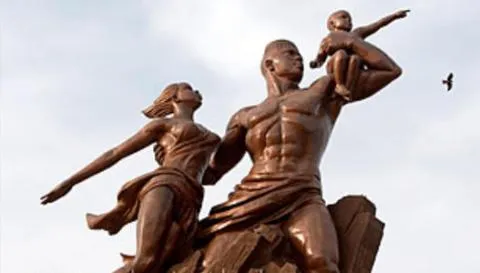
Senegal's controversial 49-metre bronze statue, taller than the Statue of Liberty, on the lower Mamelle. The lift inside takes you to the head; the view is interesting; the political backstory is worth reading first.
5. Lac Rose (Lac Retba)
An hour northeast of Dakar. The lake's pink colour is real (caused by Dunaliella salina algae) but most intense between November and May at midday. Salt collection by Bedik workers continues. Don't swim — the salinity is brutal. Combine with the Désert de Lompoul further north for a two-day loop. Lac Rose & Lompoul Desert tours on Viator
6. Saint-Louis old town walking tour
The bridge from the mainland (Pont Faidherbe), the colonial governor's residence, the central square, the river-island walking grid, and the Langue de Barbarie sand spit — a whole day's content, all on foot. Hire a local guide for the morning at the tourist office.
7. Djoudj National Bird Sanctuary
Sixty kilometres north of Saint-Louis, this UNESCO-listed wetland holds three million migrating birds at peak (November–February): pelicans, flamingos, herons, ducks, fish eagles. Boat trips run from the park entrance. Combine with a Saint-Louis stay. Djoudj bird sanctuary tours on Viator
8. Sine-Saloum Delta boat trip
A network of mangrove channels, fishing villages and bird-rich islands south of Dakar. Stay at a delta lodge, take a half-day boat with binoculars, eat oysters from the mangrove roots. The delta is a UNESCO Biosphere Reserve and feels properly wild.
9. Bandia Reserve
Closer to Saly than to a real safari, Bandia has reintroduced giraffes, rhinos, zebra and various antelope. It's a private reserve and not authentic East-African big-game watching, but it's a fair half-day for first-time visitors and excellent for families. Bandia Reserve safari on Viator
10. A night at Lompoul Desert Camp
Two hours north of Dakar, the Désert de Lompoul is a small but real dune field with permanent tented camps (Ecolodge de Lompoul, Lompoul sur Mer). Sandboard at sunset, eat under the stars, ride a camel if you must.
11. Toubab Dialaw and Espace Sobo Badé
Fifty kilometres south of Dakar, this artists' village clings to a sandstone cliff. Espace Sobo Badé, the legendary cultural centre run by the late Gérard Chenet, hosts dance, drumming and theatre nights. Stay overnight at the Auberge if you can.
12. Cap Skirring and Casamance
The southern Casamance region — south of Gambia — is a different country in atmosphere: green, Christian-and-animist mixed with Muslim, Diola rather than Wolof culture, palm wine instead of bissap. Cap Skirring has the best beach in Senegal. Add 4–5 days minimum for the round trip from Dakar; flying with Air Senegal makes more sense than driving.
13. A Senegalese wrestling match
Lutte sénégalaise is a national obsession, with major fights filling stadiums and front pages. Big bouts happen at the Arène Nationale de la Lutte in Pikine. Local matches with drumming and pre-fight mystic preparation happen most weekends in season. Ask your hotel.
14. Cooking class with a Dakar chef
Learning to make proper thiéboudienne or yassa from scratch is the single best investment a food-curious traveller can make in West Africa. Several Dakar chefs run home classes for £30–50 per person including market visit. Senegalese cooking classes on Viator
15. A drumming or dance class
Sabar (drumming) and mbalax (dance) classes are widely available in Dakar — most studios charge £15–25 for a 90-minute group class. École de Sabar and Compagnie Jant-Bi are both serious teachers.
Food and drink
If The Gambia's food culture is rooted in family lunches, Senegal's is that plus a real restaurant tradition. Dakar has the most evolved food scene in West Africa.
The dishes you must try
- Thiéboudienne (also written ceebu jen) — the national dish: red rice slow-cooked with fish, tomato, vegetables and nététou (fermented locust bean). Wolof for "rice and fish". Eat it at lunch, when it's freshest.
- Yassa — onions caramelised in lemon, mustard and stock until they collapse, served over grilled chicken (yassa poulet) or fish (yassa poisson). The Senegalese version is more lemony than the Gambian.
- Mafé — groundnut/peanut stew with beef, lamb or chicken over rice. The Gambian domoda is its sibling.
- Dibi — Mauritanian-Senegalese grilled mutton, marinated, cooked over wood, eaten with onion and mustard. Found at dibiteries (specialist grills) all over Dakar.
- Thiou — tomato-based stew, usually with fish or beef.
- Pastels — small fish-stuffed fried pastries, the West African empanada. Sold by women on every Dakar street corner at lunchtime.
- Soupe Kandia — okra, palm oil and smoked fish stew, southern Senegalese.
- Caldou — clear white-fish stew with lime, southern Casamance speciality.
Where to eat
Dakar:
- Le Lagon 1, Almadies — landmark seafood restaurant on a private beach, in business since 1965, specialising in grilled fish.
- Chez Loutcha, Plateau — Cape Verdean kitchen, expats' favourite, generous portions.
- La Calebasse, Almadies — proper Senegalese cooking in a smart setting; thiéboudienne benchmark.
- Le Djembé, Plateau — live music venue, decent food, good for a long evening.
- Layu, Almadies — modern Senegalese-fusion, the chef's creative work, currently the food critic's pick.
Saint-Louis:
- La Linguère, Île Nord — the best thiéboudienne in town.
- Flamingo, on the Faidherbe Bridge end — French-Senegalese, lovely terrace.
- La Pirogue, Île Sud — fish straight off the boats.
Saly / Petite Côte:
- Le Touareg, Saly — long-running grill, popular with French expats.
- Café de la Plage, Toubab Dialaw — the village's best lunch.
Drinks
- Gazelle — the local lager, drinkable
- La Gazelle Sapphire — its slightly upmarket cousin
- Bissap — hibiscus drink, sweet, ubiquitous
- Bouye — baobab-fruit drink, milky, refreshing
- Café Touba — coffee infused with selim pepper, served sweet and strong
- Ataya — three-round green tea ritual, an afternoon institution; strong, sweet, taken with male company
- Wine — French and Moroccan widely available; Senegalese wine is not a thing
Etiquette
- Use the right hand for eating, especially from a shared bowl. Left hand is not polite.
- Greetings before transactions. "Salaam aleikum / nanga def" is a daily ritual, not chit-chat.
- Tipping: round up at local cafés, 10% in tourist restaurants where service isn't included.
Getting around
Within Dakar
Yango and Heetch (ride-hail apps) are the easy answer for tourists. Trips across town run XOF 1,500–4,500 (£2–6). Yellow taxis with a meter exist; agree the price before getting in. Cars rapides (the painted minibuses) and the new BRT run urban routes — interesting for travellers, slow if you're in a rush.
Between cities
- Sept-place taxis (shared Peugeot 504s) — the proper Senegalese intercity transport. Run from dedicated gares routières. Dakar to Saint-Louis is about 5 hours and XOF 8,000–10,000 (£10–13) per seat. Cramped but functional.
- Coach buses — Dem Dikk and a few private operators run modern coaches Dakar–Saint-Louis, Dakar–Touba, etc.
- Air Senegal — domestic flights to Saint-Louis (when running), Cap Skirring, Tambacounda, Kédougou. Fares £80–150 each way.
- TER (Train Express Régional) — fast suburban train Dakar–Diamniadio, useful for getting in and out of central Dakar.
- Self-drive hire — possible, expensive, not recommended for first-timers. Police checkpoints are frequent and dirt-road driving requires confidence.
To Saint-Louis specifically
The drive is 4–5 hours on the toll motorway. A private driver for the day costs XOF 80,000–110,000 (£100–145). A sept-place is one-tenth that. A flight with Air Senegal saves the day each way.
To Casamance
The 600 km road route via Tambacounda or via The Gambia is a 12-hour day. The MV Aline Sitoé Diatta ferry from Dakar to Ziguinchor takes about 16 hours overnight, twice weekly, and is genuinely pleasant on the right cabin grade. Air Senegal to Cap Skirring is the time-saver.
Budget for Senegal
Senegal runs noticeably more expensive than The Gambia — perhaps 30–50% more for accommodation and restaurants in Dakar, less of a gap in the regions. A "typical" mid-range traveller lands around £100–130 per day on the ground, on top of flights.
| Level | Accommodation | Food | Transport | Activities | Daily total |
|---|---|---|---|---|---|
| Shoestring | Guesthouse £25–35 | Local lunches £8–12 | Cars rapides + sept-place £4 | Mostly free £6 | £45–60 |
| Mid-range | 3★ B&B £45–70 | Restaurants £18–28 | Yango + occasional driver £10–18 | One activity £20–35 | £100–140 |
| Comfortable | 4★ half-board £80–130 | Anywhere £30–45 | Private driver day £40+ | Tour or class £35–60 | £200–280 |
| Luxury | Top hotels £180+ | Layu / Le Lagon £50+ | Private car £60+ | Private guide £80+ | £350+ |
Safety, health, money and connectivity
Safety
Senegal is one of West Africa's safer countries — politically stable, with low violent-crime rates by regional standards. The day-to-day risks for tourists are:
- Bag-snatching in central Dakar (Plateau, Sandaga market, around Place de l'Indépendance) — keep daypacks in front, phones out of sight on the street.
- Pickpocketing in crowded markets — same precautions as Naples or Barcelona.
- Driving — Senegalese road traffic, particularly the Dakar Corniche, can be chaotic. Wear seatbelts.
- Casamance — the long-running low-level conflict has been largely peaceful since around 2014, but the FCDO occasionally advises caution in specific border areas. Cap Skirring and Ziguinchor are routinely visited without issue.
The hassle factor on Senegalese tourist beaches is generally lower than on the Gambian Senegambia strip — you'll be approached by sellers and would-be guides but the persistence is less.
Health
- Yellow fever certificate is officially required for entry; carry the paper certificate.
- Malaria prophylaxis recommended for the whole country, especially southern regions in the rainy season.
- Hepatitis A, typhoid, tetanus boosters routinely advised.
- Drink bottled water; ice in established restaurants is generally fine.
- Sun — Dakar sits at 14°N. Burn times are short.
Money
The West African CFA franc (XOF) is shared with seven other UEMOA countries and pegged to the Euro at exactly 655.957 XOF = €1. This makes the currency stable and predictable in a way few African currencies are.
Bring Euros rather than Pounds — the exchange rate against the euro is fixed, against GBP it depends on whoever's changing your money. Major banks in Dakar (Société Générale, BICIS, Ecobank) have ATMs that take Visa and Mastercard reliably; smaller towns less so.
Mid-range hotels and restaurants in Dakar take cards. Outside the capital, plan to operate in cash. Withdrawal limits run XOF 200,000–400,000 (£250–500) per transaction, so you may need multiple withdrawals for a long stay.
Connectivity
Orange and Free are the two main networks. SIMs cost €5–10 with usable data bundles; you'll need your passport to register. 4G is good in Dakar and around Saint-Louis, patchier in the delta and east. Most mid-range hotels have working WiFi for messaging and email.
Plug type
Senegal uses European-style C and E plugs (round two-pin), not the UK-style G plug. Bring an adapter — UK chargers will not fit. (This is the opposite of The Gambia, which uses UK plugs.) Our Senegal packing list covers this and every other kit question for the trip.
Sample itineraries
3 days — Dakar focus
A long weekend that delivers a real sense of the country without leaving the capital.
Day 1 — Arrive at DSS, transfer to Almadies, lunch at Le Lagon, afternoon walk along the Corniche to Mamelles for sunset.
Day 2 — Île de Gorée in the morning (ferry from the port at 09.00 or 10.30), lunch on the island, afternoon at the IFAN museum in Plateau and the Soumbedioune craft market and fish market at sunset.
Day 3 — Morning at Lac Rose with a stop at the African Renaissance Monument. Lunch on the lake. Afternoon shopping at Sandaga or HLM market for fabric, dinner at Layu or La Calebasse, late flight or final sleep at the airport hotel.
Realistic spend on the ground: £280–420 per person.
7 days — the standard first visit
Combines Dakar with one other region.
Days 1–2 — Dakar. Gorée, Soumbedioune, Mamelles sunset, dinner at Le Lagon.
Day 3 — Drive north to Saint-Louis (5 hours with stops). Walk the bridge at sunset.
Day 4 — Saint-Louis: morning walking tour, lunch at La Linguère, afternoon trip to the Langue de Barbarie.
Day 5 — Day trip to Djoudj National Bird Sanctuary for the morning (early start, back for lunch). Evening at one of the colonial bars on the river.
Day 6 — Drive south, lunch at Lompoul Desert Camp (or overnight if budget allows). Continue to Dakar or fly from Saint-Louis if Air Senegal is running.
Day 7 — Last morning in Dakar (cooking class, market shopping), late flight.
Realistic spend on the ground: £550–900 per person.
14 days — the proper trip
Two weeks lets you fold in the Sine-Saloum Delta and a southern leg, and gives the country room to breathe.
Days 1–3 — Dakar (Gorée, Mamelles, Lac Rose, Soumbedioune, dinner at Le Lagon). Optional drumming class.
Days 4–5 — Drive to Saint-Louis via Lompoul Desert Camp overnight. Dunes at sunset, camel ride, sleep under canvas.
Days 6–7 — Saint-Louis old town walking, Djoudj birding day trip, jazz in the evenings.
Days 8–9 — Drive south to the Sine-Saloum Delta. Two nights at a stilt lodge — boat trips, mangrove paddling, oysters from the roots.
Days 10–11 — Continue to Cap Skirring by air (Air Senegal Dakar–Cap Skirring) or by ferry overnight. Beach, Diola villages, palm wine.
Days 12–13 — Return to Saly for two nights of finish-line beach time and a Bandia Reserve half-day.
Day 14 — Drive back to Dakar (1.5 hours), final lunch, evening flight.
Realistic spend on the ground: £1,300–2,000 per person, depending on the Cap Skirring leg.
Frequently asked questions
Is Senegal safe for tourists?
Yes, broadly. Senegal is politically stable, has held peaceful elections through several transitions, and crime against tourists is low by regional standards. Standard urban precautions in Dakar — bag in front, phone away, watch the markets — are sufficient. Casamance has a long-running low-level conflict but tourist areas (Cap Skirring, Ziguinchor) are routinely visited without incident. Always check the latest FCDO advice before booking.
Do UK citizens need a visa for Senegal?
Currently no — UK passport holders can enter visa-free for stays up to 90 days. This has changed before, so verify directly via gov.uk within a month of travel.
Is Senegal more expensive than The Gambia?
Yes, noticeably. Dakar restaurants and hotels can run 40–60% above their Gambian equivalents. Outside Dakar the gap narrows. A two-week Senegal trip typically costs 25–30% more on the ground than a Gambian one of similar comfort.
Do I need to speak French?
Outside the tourist hotels and major Dakar restaurants, yes — at least functionally. Wolof is the lingua franca on the street, French is the second language of business and government, and English is rare beyond the tourist trade. Even basic French (greetings, numbers, ordering food) makes a substantial difference. Travellers without any French will manage in resort hotels but feel cut off elsewhere.
Can I combine Senegal and The Gambia?
Easily, and many travellers do. The land border at Karang/Amdallai is straightforward; the Banjul–Barra ferry handles foot traffic. We cover the comparison in our Gambia vs Cape Verde and Gambia holidays guides. The two countries make natural pairs: Gambia as the gentler beach week, Senegal as the cultural depth. We compare them directly in our Senegal vs Gambia guide.
When is the Saint-Louis Jazz Festival?
Mid-May, usually four days. Book accommodation 4+ months ahead — the small old town fills up.
Is Casamance worth the journey?
For a 14-day trip, yes — it's culturally distinct (Diola, partly Christian, palm-wine drinking, lush green) and the beaches at Cap Skirring are the country's best. Fly rather than drive (Air Senegal Dakar–Cap Skirring) or take the overnight ferry (Aline Sitoé Diatta) which is itself an experience. Skip if your trip is under 10 days. Our Casamance travel guide covers getting there, Cap Skirring beaches and Diola village visits in full.
Can I use Euros directly?
In tourist hotels and a few Dakar restaurants, yes — at notional rates. For everything else, you need CFA. Bring Euros (not Pounds) to change at the airport or your first bank, then operate in cash outside main hotels.
What about Touba?
The Mouride brotherhood's holy city is the second-largest in Senegal and central to Senegalese spiritual life. Tourist visits happen but require sensitivity — proper dress, no photographs near the Great Mosque, and ideally a knowledgeable guide. The annual Magal pilgrimage brings millions and is not the moment for a casual visit. For most tourists, Touba is a half-day stop on the way back from Saint-Louis.
Is the Sine-Saloum Delta better than the Gambian birding sites?
Different rather than better. Gambia is denser and more compact (Abuko, Kotu Creek, Tanji can all be walked in single days). The Sine-Saloum Delta is bigger, slower, more boat-based and more remote. Serious birders should aim for both.
Related guides — dive deeper
Best time to visit Senegal — Month-by-month breakdown including festival dates and flight pricing windows.
Senegal vs Gambia: which should you book? — A direct comparison for travellers weighing one against the other.
Senegal packing list — What to bring, what to leave, what to buy locally — including the plug-adapter trap that catches Brits coming from The Gambia.
Dakar travel guide — Two- to four-day Dakar plan with neighbourhoods, restaurants and music venues.
Saint-Louis Senegal travel guide — UNESCO old town, jazz festival, river-island walking and Djoudj day trips.
Casamance travel guide — How to get there, where to stay, Cap Skirring beach, Diola villages.
Sine-Saloum Delta guide — Eco-lodges, boat trips, birdlife and what to actually do in the mangroves.
Gambia holidays — Pair Senegal with The Gambia for a longer two-country trip.