Affiliate disclosure: This guide contains Booking.com and Viator links. If you use them we earn a small commission at no cost to you — we only recommend places and operators we'd send a friend to.
Saint-Louis Senegal: The Travel Guide to the Jazz City
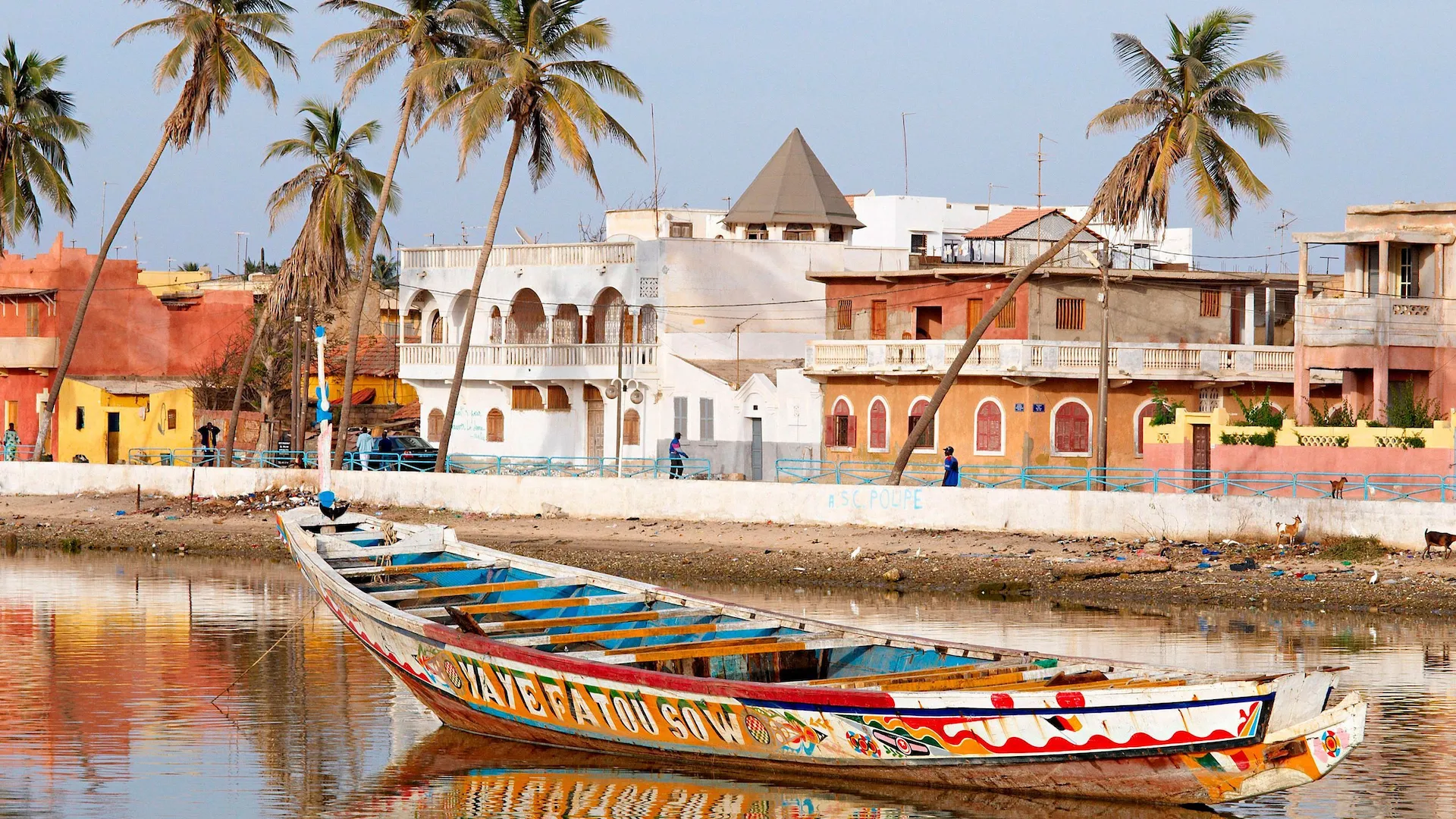
Two hundred miles north of Dakar, on a narrow island in the Senegal River, Saint-Louis is the country's most photogenic city and its most historically serious. The former capital of French West Africa, it has peeling pastel facades, horse-drawn calèches, a colonial-era iron bridge and a music festival that pulls in African and European musicians for four nights every May. Most people who come for two days wish they'd booked three.
Quick facts
- Distance from Dakar: ~270 km (4–5 hours by road)
- UNESCO status: World Heritage Site since 2000
- Population: ~300,000
- Jazz Festival: mid-May, annually
- Best visited: November–May (dry season)
Why go
For the architecture. The old town sits on a narrow river island (Île de Saint-Louis), and walking its grid is like seeing the French colonial capital preserved in amber — the governor's palace, the cathedral, the trading houses, all peeling beautifully. No new development is allowed on the island.
For the music festival. The Saint-Louis Jazz Festival (four nights, mid-May) is the cultural event of the Senegalese year — African fusion, European improvisers, concerts in courtyards and on the riverbanks.
For Djoudj. Sixty kilometres north, one of the world's most important bird sanctuaries holds three million migrating birds in winter. A half-day boat trip from the park entrance is among the best wildlife experiences in West Africa.
For the pace. Saint-Louis is the antidote to Dakar's density — calèches on cobblestones, fishermen mending nets on the Langue de Barbarie, afternoons that stretch.
Getting there
By road from Dakar — 4 to 5 hours on the toll motorway. Private driver: XOF 80,000–110,000 (£100–145) for the day. Sept-place taxi from Dakar's Gare Routière de Pompiers: XOF 8,000–10,000 (£10–13) a seat, about 5 hours.
By air — Air Senegal has run Dakar–Saint-Louis domestic flights when the route is operating (30–40 minutes, £80–120 each way). Check early — it's been intermittent.
The old town
The island is small — you can walk its length in 20 minutes. The grid of colonial streets holds:
- Pont Faidherbe — the 1897 iron bridge linking the island to the mainland. The best photo in Saint-Louis is from the south end looking north.
- Place Faidherbe — the central square, with the governor's palace (now the city hall), the cathedral and the main hotel strip.
- The Signares houses — homes of the Métisse women traders who built much of the city's wealth in the 18th–19th centuries. Most are private now; some are hotels.
- Rue Blaise Diagne — the main commercial street, lined with shops, tailors and cafés.
Walking route: Start at the south end of Pont Faidherbe, walk north through Place Faidherbe to the tip of the island, then come back along the western riverbank. Two hours at a relaxed pace.
Hire a local guide for the morning (XOF 15,000–25,000 through the tourist office or your hotel) — the layers of Signare history, the Mouride presence and the colonial architecture make far more sense with context.
The Langue de Barbarie
A narrow sand spit dividing the Senegal River from the Atlantic, the Langue de Barbarie runs south from Saint-Louis for about 30 km. The fishing village of Guet Ndar sits at its north end — one of the most densely populated places on earth, where the Atlantic and the river are each 50 metres away and the houses go three families deep. Walk there from the island in 10 minutes and take in the scale. Don't swim — the currents are dangerous and the beach belongs to the fishing fleet.
Langue de Barbarie National Park covers the southern section and nesting sites for several tern and pelican species.
Djoudj National Bird Sanctuary
Sixty km north of Saint-Louis, this UNESCO wetland is one of the world's top three bird sanctuaries. Three million birds (pelicans, flamingos, herons, ducks, fish eagles, waders) pass through at peak in November–February. A boat trip on the river channels runs 2–3 hours and covers multiple species in extraordinary concentrations.
How to visit: Get to Saint-Louis the night before. Leave by 06.30 (the early start matters — activity peaks before 10.00). The entrance is 60 km north; boats run from there. Hire a driver from Saint-Louis for the day (XOF 35,000–50,000).
Djoudj bird sanctuary tours on Viator
Best months: November to January for the biggest numbers. February is good; March thins out as the Palearctic migrants head north.
Saint-Louis Jazz Festival
Four nights, mid-May. African and European musicians play in courtyards, on the waterfront, in bars and public squares across the island and the mainland districts, with free concerts alongside the paid evening events.
Practical: Book accommodation 4–5 months ahead — the island has limited beds and fills up completely during festival week. Budget XOF 15,000–30,000 for ticketed evening events. The May heat (35 °C+) is real; the music makes it worth it.
Where to stay
Budget (£40–70 per night):
- Hotel La Résidence — colonial hotel with river views, walkable to everything, atmospheric
- Auberge de Jeunesse de Saint-Louis — basic, central, popular with independent travellers
Mid-range (£70–130):
- Hôtel de la Poste — the colonial post hotel on Place Faidherbe, where Mermoz and Saint-Exupéry stayed on the Aéropostale route. Well-kept, excellent position
- Hôtel Sindone — smaller, quieter, river-facing rooms
Boutique / luxury (£130–200+):
- Radeau de la Méduse — barge hotel moored on the river, nine cabins, an extraordinary spot at sunset
- Maison Rose — a renovated Signare house, atmospheric, with a good restaurant
Where to eat
- La Linguère (Île Nord) — the benchmark thiéboudienne in town; eat it at lunch when it's freshest
- Flamingo (bridge end) — French-Senegalese, lovely terrace, good for evenings
- La Pirogue (Île Sud) — fish straight off the boats that morning
- Le Pelican — colonial café on Place Faidherbe, coffees and pastries
Two-night itinerary
Day 1: Arrive afternoon. Walk Pont Faidherbe at sunset. Dinner at La Linguère or Flamingo.
Day 2: Morning walking tour of the old town (hire a guide). Lunch at La Pirogue. Afternoon walk to Guet Ndar fishing village on the Langue de Barbarie. Sundowner on your hotel terrace.
Day 3 (if you have it): Djoudj day trip (leave 06.30, back by 14.00). Afternoon slow — a calèche ride, the craft market, a final riverside dinner.
FAQ
How long should I spend in Saint-Louis?
Two nights minimum. Three if you want to do Djoudj properly and have time to settle into the city's pace.
Is Saint-Louis safe?
Yes — quieter and less pressured than Dakar. Standard urban sense applies; the island is very walkable at night on the main streets.
Can I visit Djoudj without staying in Saint-Louis?
In theory yes (a very long day from Dakar), but it's impractical — you need an early start and the drive from Dakar is 4+ hours each way. Stay in Saint-Louis.
When is the Jazz Festival?
Mid-May each year, typically four nights.
Continuing south? Read our full Senegal holidays guide for itineraries combining Saint-Louis with Dakar and the Sine-Saloum Delta. Djoudj and birdwatching is covered in depth in our delta guide.