Affiliate disclosure: This guide contains Viator links. If you book through them we earn a small commission at no extra cost to you.
The Gambia and Senegal sit at the geographic heart of the transatlantic slave trade — the rivers, islands and coastal forts of Senegambia were among the main points of departure for enslaved Africans between the 17th and 19th centuries. Today that history forms one of the most significant heritage circuits in the world, drawing African-American, African-British and Caribbean visitors, and anyone who wants to understand where the modern world's gravest atrocity began.
This guide covers the key sites, how to visit them respectfully, and the practical logistics of a heritage-focused trip.
The historical context
From the 1600s to the 1800s, European trading posts — British, French, Dutch and Portuguese — operated along the Gambia River and the Senegalese coast. James Island (now Kunta Kinteh Island) in the River Gambia, and Gorée Island off Dakar, were among the staging posts captive Africans passed through before the Middle Passage.
Alex Haley's Roots (the 1976 novel; the 1977 TV series) traced one family's line from the Mandinka village of Juffureh to American slavery and beyond. It made the River Gambia route famous worldwide and built the heritage circuit that still brings thousands of visitors a year. Some specific claims in Roots have been challenged, but the broader history it represents is entirely real — and Juffureh and Kunta Kinteh Island carry a resonance no amount of academic qualification undoes.
Key sites
Kunta Kinteh Island (James Island)
A small island in the River Gambia, 25 km upriver from the Atlantic, holding the ruins of Fort James — a British slave-trading fort built in the 1660s. Renamed Kunta Kinteh Island in 2011 after the Roots ancestor. A UNESCO World Heritage Site (jointly listed with six other Senegambian sites).
The ruins are atmospheric and the island is otherwise uninhabited — you arrive by boat and have it to yourself. The fort walls, the dungeons, the gun emplacements and the isolation on a wide, slow river make it one of the most affecting historical experiences in West Africa.
How to visit: Most trips pair Kunta Kinteh Island with Juffureh on the north bank. [Full guide: /guides/kunta-kinteh-island]
Juffureh Village
The north-bank village Haley identified as Kunta Kinte's home. A Kinte family griot (oral historian) meets visitors and recounts the family history. The village is small — a few compounds, the mosque, the women's cooperative — and visits are built around the griot recitation.
Whatever the historical debates, standing in Juffureh and hearing an oral historian trace a lineage broken by the slave trade lands hard, particularly for visitors with family ties to the African diaspora.
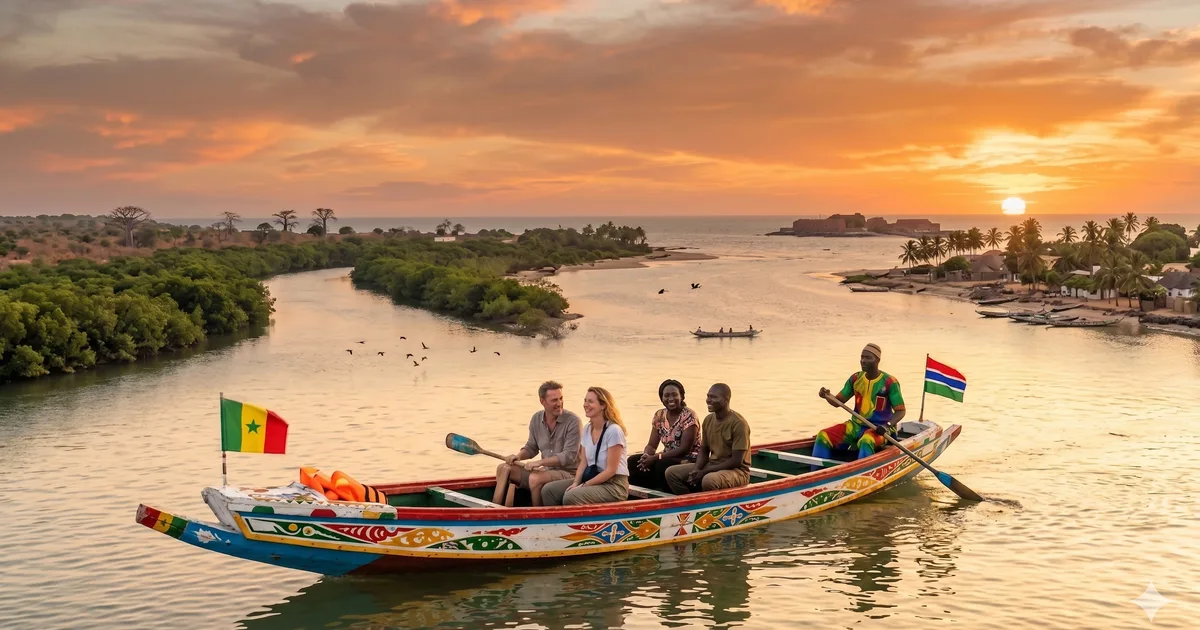
Access: By boat from Banjul or from Albreda on the north bank. Most organised tours combine the island (south approach by boat) with Juffureh (north-bank stop).
Albreda
Next to Juffureh on the north bank. A former French trading post, Albreda has a small ECOWAS Museum of Slavery with artefacts and context from the river trade. Worth an hour before or after Juffureh.
Gorée Island, Senegal
A 25-minute ferry from Dakar's port, Gorée is the most visited heritage site in West Africa. The Maison des Esclaves (House of Slaves), with its famous Door of No Return, is the focal point, but the whole island is a UNESCO World Heritage Site — the architecture intact, the streets unchanged from the colonial period, the history present in every wall.
The scholarship on whether the Maison des Esclaves was specifically a major export point (rather than a general merchant house) is contested. What isn't contested: Gorée was a French colonial trading island, enslaved people passed through it, and it serves as the continent's most important physical memorial to the trade.
How to visit: See our Dakar travel guide for the Gorée ferry details.
Wassu Stone Circles
A UNESCO World Heritage Site 200 km upcountry — one of four groups of megalithic stone circles in Senegambia, dating from the 3rd century BC to the 16th century AD. Wassu (The Gambia) and Sine Ngayène (Senegal) are the largest and best preserved. Their purpose isn't fully understood; the culture that built them vanished before European contact. A half-day stop en route upcountry.
Fort Bullen, Barra
On the north bank at the river mouth, Fort Bullen is a 19th-century British fort built specifically to intercept slave ships and enforce abolition after 1807. It represents the suppression of the trade rather than the trade itself — a different but equally significant chapter.
The Roots Homecoming Festival
Every two years (odd years), The Gambia hosts the International Roots Festival — a week of music, ceremony, village visits, cultural exchange and speeches bringing African diaspora communities together at Juffureh, Banjul and the tourist strip.
It draws tens of thousands of African-American, Caribbean and British-African visitors and carries real cultural and emotional weight. Accommodation books out months ahead; Banjul and Kololi fill completely. If it lines up with your travel window, plan 6+ months ahead.
How to visit respectfully
These aren't theme parks. A few guidelines:
- Use a knowledgeable guide — at Juffureh, the griot recitation is the point; at Kunta Kinteh Island, a guide who knows the fort in context is the difference between a ruin and a revelation.
- Photography — allowed at all the sites, but read the room. The Maison des Esclaves dungeon is not the place for a smiling selfie.
- Listen before asking — particularly at Juffureh, where visitors sometimes challenge the Haley narrative before they've really engaged with what the griot is saying.
- Allow time — a rushed Kunta Kinteh Island + Juffureh trip produces receipts, not understanding. Give it a full day.
Practical logistics
Kunta Kinteh Island / Juffureh: Full-day excursion from Banjul or Kololi. By organised tour: £25–45 per person including transport and guide. Independently: hire a driver to Banjul and a boat from the waterfront. Kunta Kinteh Island & Juffureh tours on Viator
Gorée Island: Ferry from Dakar port, running through the day. Half-day from Dakar.
Wassu Stone Circles: Full-day trip from the coast, or a stop on an upcountry itinerary.
FAQ
Is The Gambia appropriate for African-American heritage travel?
Yes — and it's one of the most significant destinations for it. The Gambia was among the principal points of departure for enslaved Africans to the Americas. The government and tourism industry have invested in heritage infrastructure specifically to welcome diaspora visitors, and the experience of visiting Juffureh and Kunta Kinteh Island is widely reported as profound.
Is Alex Haley's Roots historically accurate?
The broad history — Mandinka society on the River Gambia, capture by slave raiders, transport and sale — is accurately represented. Specific genealogical details have been challenged by historians. The debate doesn't diminish the importance of the place or the experience of visiting.
Do I need to be of African heritage to visit these sites?
No. The history is universal. Visitors of all backgrounds come to Gorée, Kunta Kinteh Island and the Maison des Esclaves. The experience is no less affecting for a White European visitor — perhaps more uncomfortable, which isn't a bad thing.
Plan the full trip: Kunta Kinteh Island complete guide. Gambia holidays guide for logistics and accommodation. Dakar travel guide for Gorée Island access.