Affiliate disclosure: This guide contains Viator links. If you use them we earn a small commission at no extra cost to you.
In the middle of the River Gambia, 25 km from the Atlantic, a small uninhabited island holds the ruins of Fort James — a British slave-trading fort built in the 1660s and named for the Duke of York, later James II. In 2011 the island was renamed Kunta Kinteh Island, after the ancestor Alex Haley traced in Roots. It's a UNESCO World Heritage Site and one of the most historically charged places in West Africa.
On the north bank, a 10-minute boat ride away, Juffureh village is where the Kinte family griot meets visitors and recounts a lineage broken by the slave trade. A full day taking in the island and the village is among the most serious and affecting things you can do in the region.
Quick facts
- Island location: River Gambia, ~25 km upriver from the Atlantic
- UNESCO status: World Heritage Site (jointly listed with related Senegambian sites)
- Juffureh: North bank of the River Gambia, opposite Albreda
- Best approach: Organised full-day excursion from Banjul or Kololi
- Time needed: Full day (allow 8–9 hours including travel)
Getting there
Organised tour (recommended)
Most Kololi and Banjul hotels run the Kunta Kinteh Island / Juffureh day trip — usually hotel transport, a river boat, a guide, and entrance to both sites.
Cost: £25–45 per person. Kunta Kinteh Island & Juffureh tours on Viator
Independent
Take a taxi from Kololi to the Banjul waterfront (D200–350), then negotiate a private boat upriver to the island. This needs more local knowledge and bargaining; an organised tour handles the logistics and adds a guide who makes all the difference.
Via the north bank
Some tours come in via the North Bank Road — a longer drive to Albreda or Juffureh, then a short boat to the island. The road is improving, and this approach is sometimes used for the return.
The river journey
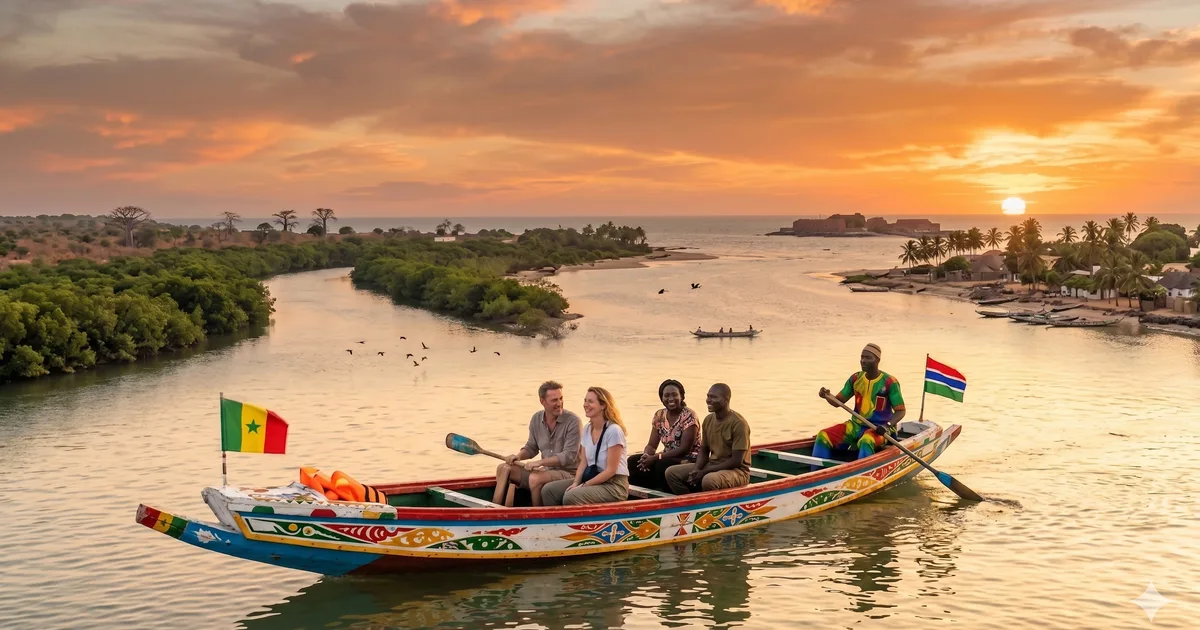
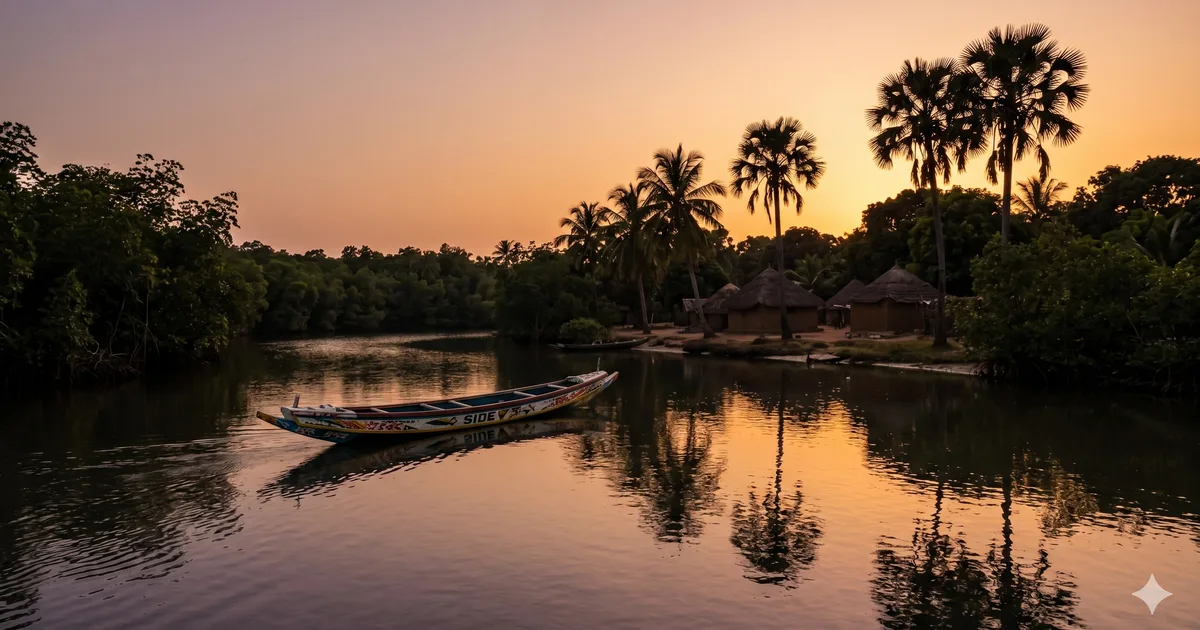
The boat upriver from Banjul takes 1.5–2 hours each way, depending on the vessel. The river is wide here — 3–5 km across — mangroves on both banks, the odd hippo in the shallows, and kingfishers, herons and African fish eagles working the water the whole way. The journey is part of it.
Kunta Kinteh Island (Fort James)
The island is small — 20 minutes to walk. The ruins of Fort James are extensive: the walls (partly standing), gun emplacements, storage buildings, the slave dungeons.
What to look for:
- The main gateway and remaining walls — 17th–18th-century British colonial military architecture
- The dungeons — low stone rooms where captives were held before transport
- The cannon positions facing the river — the fort defended the trade route as much as it served it
- The isolation — on a silent river with only the current and the birds, you feel how remote this place was in the 18th century
A good guide is essential. The ruins without context are stones; with context they're one of the most affecting heritage sites in Africa.
Photography: Allowed everywhere. The dungeons are dark — bring a torch or use your phone.
Juffureh village
After the island, the boat crosses to the north bank for Juffureh.
The griot recitation
A member of the Kinte family — usually identified as a griot (jali), the hereditary keeper of oral history in Mandinka society — meets visitor groups and recounts the lineage and the family's history. It's partly in Mandinka, partly translated into English. It's performed regularly and is a polished account, but the tradition behind it — an oral genealogy kept across generations — is genuine and remarkable.
The village
Juffureh is a small, working Mandinka village — compounds, a mosque, a women's cooperative selling batik and crafts. It's a living place, not a heritage museum, so treat it that way: greet people, ask before photographing, and take the craft sellers' pitch without feeling cornered.
Albreda
Next to Juffureh on the north bank, Albreda has the ECOWAS Museum of Slavery — small but well put together, with artefacts, documents and maps from the River Gambia's slave-trade era. Worth an hour after Juffureh.
How to approach the visit
This isn't a light excursion. A few notes:
- Don't rush. Give it a full day. Tours that bolt Kunta Kinteh Island onto Abuko, Banjul and a craft market in one go produce a tick-box version, not the real thing.
- Give the griot your full attention. Not the moment to check your phone. The recitation runs 20–30 minutes and rewards it.
- Set expectations for Juffureh. It's a small, ordinary village. Visitors expecting a monument sometimes feel confused — but what's there is better than a monument: a living community with an intact oral tradition.
- The Roots debate. You may have heard that Alex Haley's specific genealogical claims about Juffureh were challenged. They were. It doesn't make the visit less important — the history the site stands for is real, and Haley's story brought it to millions. Engaging with the debate thoughtfully beats either dismissing the site or ignoring the scholarship.
Practical notes
- What to bring: Water (the river is hot), sunscreen, cash in Dalasi for the boat, fees and any crafts, binoculars for the river, a hat
- Entrance fees: A small fee at Kunta Kinteh Island; a donation/fee at Juffureh for the griot performance
- Children: Fine for older children and teenagers who can engage with the history. Less suited to very young children, given the journey length and the subject.
FAQ
How long is the boat trip to Kunta Kinteh Island?
1.5–2 hours each way from Banjul, depending on the boat. The journey's part of the experience — take binoculars.
Is the Haley/Roots connection accurate?
The broad history is real; the specific genealogical claims have been questioned by historians. The visit is worth making regardless — it's the most powerful heritage site on the Gambia River.
Can I visit independently without a tour?
Yes, but the logistics are much harder and the experience is much poorer without a guide to contextualise the ruins and translate the griot. An organised tour is strongly recommended.
Is Kunta Kinteh Island accessible year-round?
Yes — the river is navigable all year. The dry season (November–April) is more comfortable for the boat.
More heritage: see the full roots and heritage tourism guide for Gorée Island, Wassu Stone Circles and the Roots Festival. Full trip planning: Gambia holidays guide.