Affiliate disclosure: Booking and Viator links in this post earn us a small commission if you use them — we only recommend places and operators we'd stand behind.
They share a border, the same Sahel climate, the same West African coast, and broadly the same tourist season. But Senegal vs Gambia is not a close call once you know what you're actually comparing. One is a compact English-speaking beach holiday with extraordinary wildlife. The other is a serious, French-speaking country with a capital city you could spend a week in without touching a beach. We'll tell you which one to book.
The one-sentence answer
The Gambia is the warm, easy, English-speaking week. Senegal is the ambitious, French-speaking fortnight with more to see.
If you want a relaxed resort trip with wildlife day trips included, The Gambia. If you want cultural depth, serious food, UNESCO cities and a country that rewards exploration, Senegal.
At a glance
| The Gambia | Senegal | |
|---|---|---|
| Size | 11,300 km² (smaller than Yorkshire) | 196,700 km² (≈ South Dakota) |
| Official language | English | French |
| Lingua franca | Wolof, Mandinka | Wolof |
| Currency | Gambian Dalasi (GMD) | CFA franc (XOF), pegged to Euro |
| Flight time from London | ~6h 10m direct | ~6h direct or 8–10h indirect |
| Direct UK flights | TUI, Easyjet (seasonal) | Limited — mostly indirect |
| Best months | Nov–Feb | Nov–May |
| Typical mid-range hotel | £60–120 per night | £80–160 per night |
| Daily budget on ground | £75–110 | £100–140 |
| Food culture | Regional, deeply satisfying | West Africa's most refined |
| Birdwatching | World-class (560+ species) | Excellent (Djoudj, Sine-Saloum) |
| Beach swimming | Good — rip current caution | Good — similar conditions |
| Urban culture | Limited (Banjul is small) | Serious (Dakar is a real city) |
| English spoken widely | Yes | Tourist trade only |
| Malaria risk | Yes | Yes |
Flights and getting there
The Gambia: direct from Gatwick, Manchester and other UK airports via TUI and seasonal operators. Typical January return: £520–750.
Senegal: few true direct options from the UK (Air Senegal has operated Paris-direct; TUI has run seasonal UK charters). Most UK travellers connect through Paris (Air France), Brussels (Brussels Airlines), Madrid (Iberia) or Casablanca (Royal Air Maroc). Flight time with one stop is 8–10 hours total. Typical January return: £500–750.
The Gambia wins on ease of travel from the UK. Senegal is not dramatically more expensive to fly to, but connecting flights add two to four hours to the journey.
Weather — virtually identical
Both operate on the same West African dry/wet pattern. Dry season November to May; wet June to October. The Harmattan wind cools mornings in both countries January–February.
The main difference: Senegal extends slightly later into the warm season because the country runs further south into the tropics (Casamance) and further north toward the Sahara (Saint-Louis). The core tourist experience is identical in weather terms.
Beaches
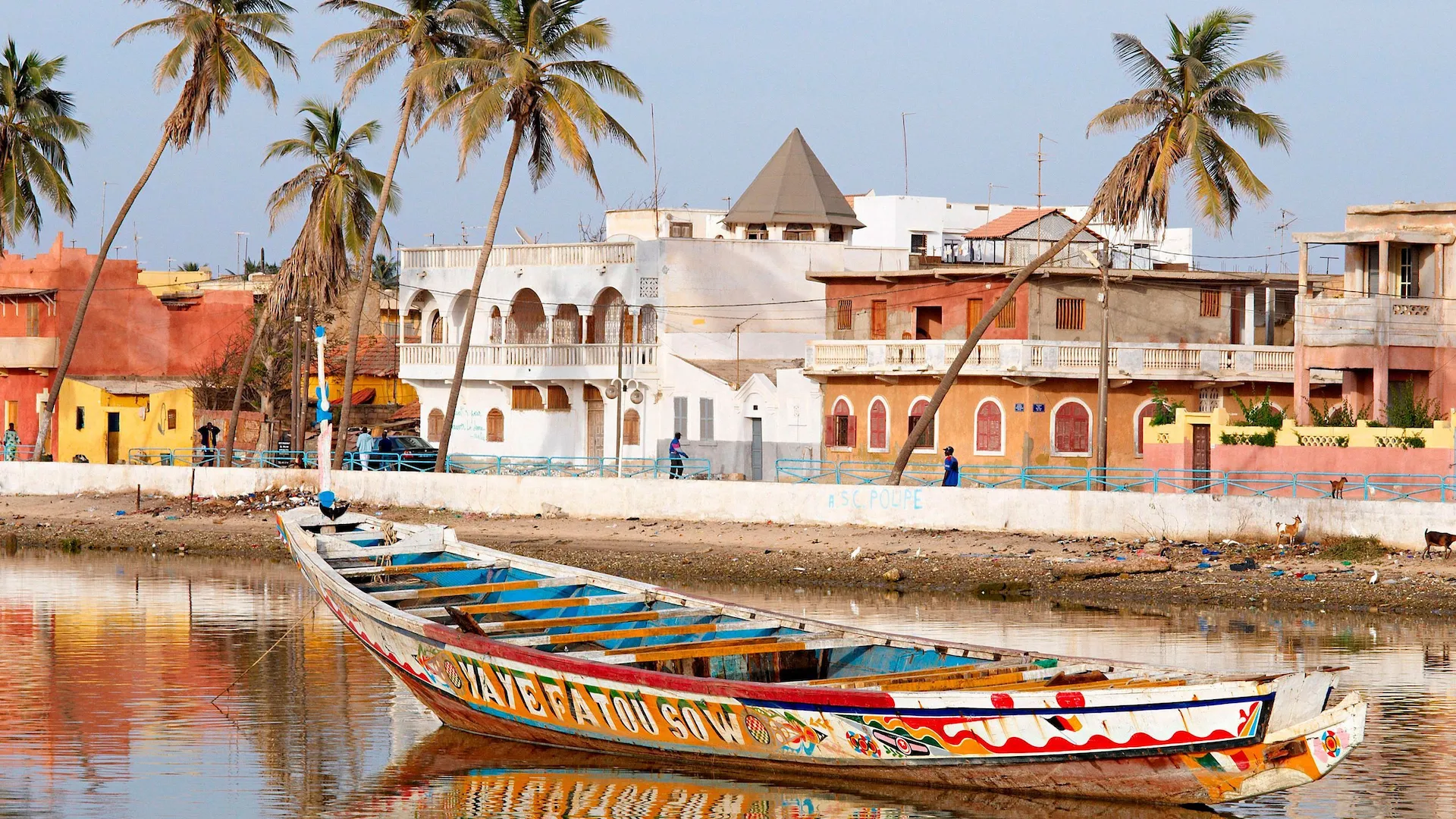
The Gambia: Long, undeveloped stretches from Banjul to Kartong. Kololi and Kotu are the tourist-facing beaches — busy, staffed by sellers, surfaced with fishing pirogues. Further south at Tanji, Sanyang and Gunjur, the beaches are emptier and more dramatic.
Senegal: Almadies and Ngor in Dakar are urban beaches, atmospheric but not classic. The Petite Côte at Saly offers the closest thing to a resort beach. Cap Skirring in Casamance is the country's best beach by some margin — wide, clean, calm water, backed by vegetation.
Neither wins outright. The Gambia's beaches are more accessible and have more fishing culture. Senegal's best beach (Cap Skirring) is significantly better, but reaching it adds two to three days to the trip.
Food
The Gambia: Serious regional cooking — benachin (Wolof jollof), domoda (groundnut stew), yassa, plasas, afra — with some excellent independent restaurants (Ngala Lodge, Butcher's Shop, Yok Ghana). The food culture is largely a lunch culture, rooted in family cooking.
Senegal: West Africa's reference cuisine, with the same dishes plus more refinement and a real restaurant scene. Dakar has thiéboudienne, mafé, dibi, pastels — and restaurants like Le Lagon 1 and La Calebasse that genuinely belong in a regional food guide. The food culture extends into the evenings.
Senegal wins. Not because The Gambia's food is poor — it isn't — but because Dakar's restaurant scene adds a dimension that Banjul simply doesn't have.
Culture and things to do
The Gambia: Concentrated and compact. Abuko Nature Reserve, Kunta Kinteh Island, Makasutu Forest, Bijilo Forest Park, Tanji fishing village, Wassu Stone Circles, wrestling matches, Brikama craft market. A fortnight reveals most of it.
Senegal: Substantially more and more varied: Gorée Island, Dakar's gallery scene, Saint-Louis UNESCO old town, Saint-Louis Jazz Festival, Djoudj National Bird Sanctuary (3 million birds), Sine-Saloum Delta, Lompoul Desert, Cap Skirring, Casamance. A fortnight gives you two or three of these regions comfortably.
Senegal wins on volume and variety. The Gambia is better if you want to go deep in one small country.
Wildlife
The Gambia: Among the world's top ten countries for accessible birdwatching — 560+ species, excellent year-round local guides, compact geography. Abuko, Kotu Creek, Tanji Bird Reserve and the River Gambia National Park (chimpanzees) are all within day-trip reach of the coast.
Senegal: Djoudj National Bird Sanctuary (UNESCO, 3 million migrating birds in winter), Sine-Saloum Delta (mangrove birdlife), and birding throughout the country. Bigger country means more ecosystems — arid Sahel north of Saint-Louis to lush Casamance forest.
No winner — different rather than better. Serious birders should aim for both.
English vs French
This is the most practical difference. The Gambia is the only English-speaking country in West Africa — hotels, restaurants, markets, taxi drivers, guides all operate in English. No language barrier.
Senegal is French-speaking, with Wolof as the street language. In tourist hotels and the main Dakar restaurants you'll manage in English; everywhere else, some French is helpful and the absence of it is felt. Travellers without French report feeling cut off outside tourist zones.
The Gambia wins if you speak only English. Senegal rewards any French.
Cost
Senegal runs 25–40% more expensive than The Gambia on the ground — more expensive accommodation in Dakar, pricier restaurants, and the sheer size of the country meaning more transport spend. The Gambia is the better value for money.
| Category | The Gambia | Senegal |
|---|---|---|
| Budget accommodation | £25–40 | £30–55 |
| Mid-range hotel | £60–120 | £80–160 |
| Meal in local restaurant | £6–10 | £10–16 |
| Meal in tourist restaurant | £15–25 | £20–35 |
| Beer | £1.20–1.80 | £2–3 |
| Half-day excursion | £18–28 | £25–45 |
| Indicative daily total (mid-range) | £75–110 | £100–140 |
Can you do both?
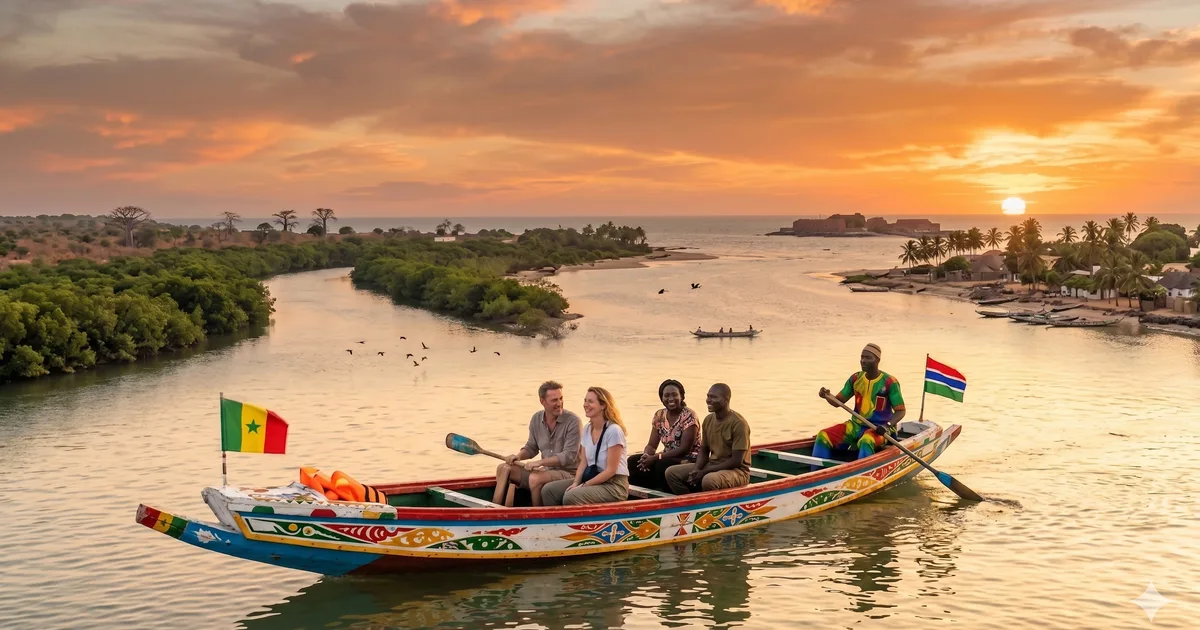
Yes — and many first-timers do. The land border crossing at Karang/Amdallai is straightforward; The Gambia sits inside Senegal geographically. The classic combination is one week in The Gambia, one week in Senegal — fly into Banjul, cross into Senegal by road, fly home from Dakar. Or vice versa.
Who should book The Gambia
- You want English spoken everywhere
- You want a compact, easy trip — one base, everything accessible
- Your budget is tighter
- You're primarily a birdwatcher
- This is your first trip to West Africa
Who should book Senegal
- You want cultural depth and a proper city (Dakar)
- You speak some French or are happy to pick it up
- You want more than one region in a trip
- Food is important to you
- You have two weeks or more
FAQ
Is The Gambia part of Senegal?
No — it is a separate country, though it is almost entirely surrounded by Senegal. It was a British colony while Senegal was French, which explains the language difference.
Which is better for a first trip to West Africa?
The Gambia, for most first-timers — English-speaking, compact, good infrastructure, gentler on the senses. Senegal is more rewarding but requires more preparation.
Which has a better food scene?
Senegal, specifically Dakar. Both countries share the same core cuisine; Dakar's restaurant scene adds depth that Banjul lacks.
Can you cross the land border easily?
Yes. The Karang–Amdallai crossing south of Banjul is the most-used tourist route and straightforward in daylight hours. Carry your passport and some CFA for Senegalese road costs.
Decided on Senegal? Read our full Senegal holidays guide for accommodation, itineraries and where to eat. Heading to The Gambia? See the Gambia holidays guide.