Affiliate disclosure: This guide contains booking links to Booking.com and Viator. If you book through them we earn a small commission at no extra cost to you. We only recommend places and operators we'd happily send a friend to.
A green bee-eater drops from a telephone wire outside Kairaba Avenue and takes a wasp mid-air. It's 7.15 am, the air already smells of charcoal and frying bonga fish, and a taxi driver is arguing cheerfully with a vegetable seller about the price of okra. This is a regular Tuesday morning in The Gambia, and if you've come for the winter sun you are about to discover that the country does a great deal more than beaches.
This Gambia holidays guide is for UK and European travellers who are seriously considering booking — not idly daydreaming. By the end you will know which month fits your trip, roughly what it will cost, which resort strip suits your style, what to eat, how to handle bumsters without being rude, and how to fold in a few days of Senegal if you want to. Everything is based on recent on-the-ground experience, flagged where prices or rules may have shifted.
Quick-answer box
- Capital: Banjul (but the tourist strip is Kololi/Kotu, 20 minutes south)
- Currency: Gambian Dalasi (GMD).
- Flight time from London: ~6 hours direct
- Visa: UK citizens — visa-free entry for up to 90 days
- Language: English is the official language. Mandinka, Wolof and Fula are widely spoken.
- Best months: November to mid-May (dry season). Peak is December to February.
- Daily budget (mid-range): £55–90 per person including accommodation, food and excursions
Why visit The Gambia
Four concrete reasons people keep coming back — and a couple you won't see on the brochures.
1. Six hours to guaranteed winter sun
From early November until mid-May the skies are almost cloudless, daytime temperatures sit at 28–32 °C and humidity is low. There are very few short-haul destinations from the UK that offer this combination, and none at Gambian prices. You leave Gatwick in a fleece and land in shorts weather before dinner. Read how The Gambia compares to Cape Verde if you're weighing up the two destinations.
2. Birdlife that's absurdly easy to see
The country has over 560 recorded bird species in an area smaller than Yorkshire. You do not need to be a serious birder — a stroll through Abuko Nature Reserve or along the Kotu Creek bridge at dawn will casually turn up hammerkops, pied kingfishers, Abyssinian rollers, and long-tailed glossy starlings the size of a magpie. Hire a local guide for a morning and the list triples. Our guide to birdwatching in The Gambia covers hotspots, target species and recommended local guides.
3. Atlantic beaches that aren't packed
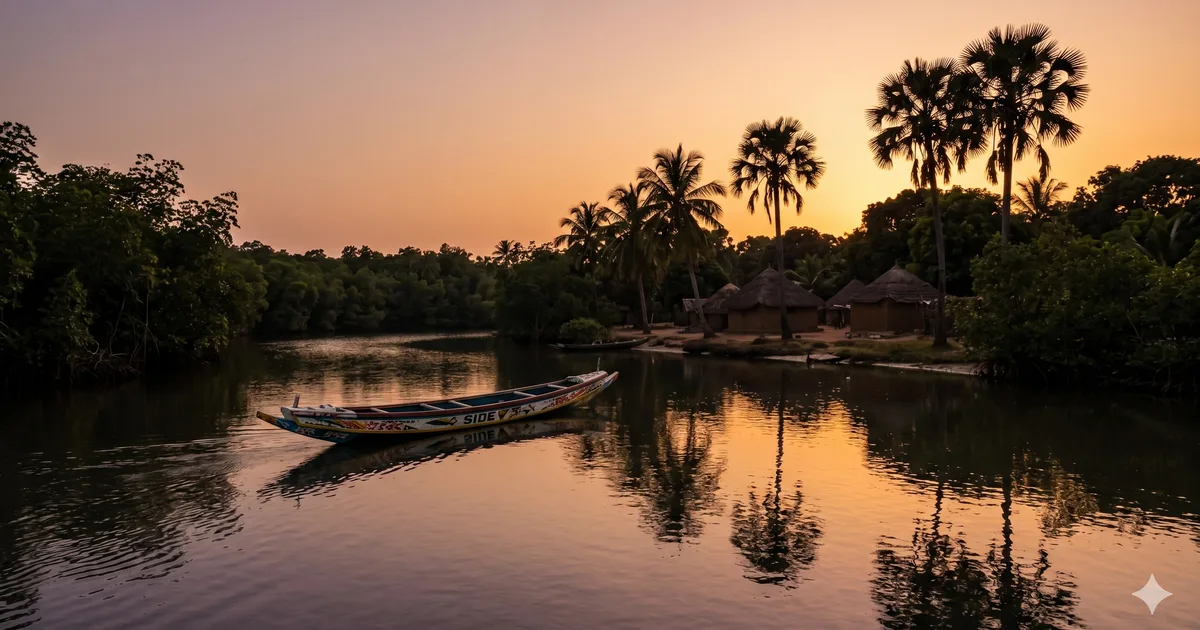
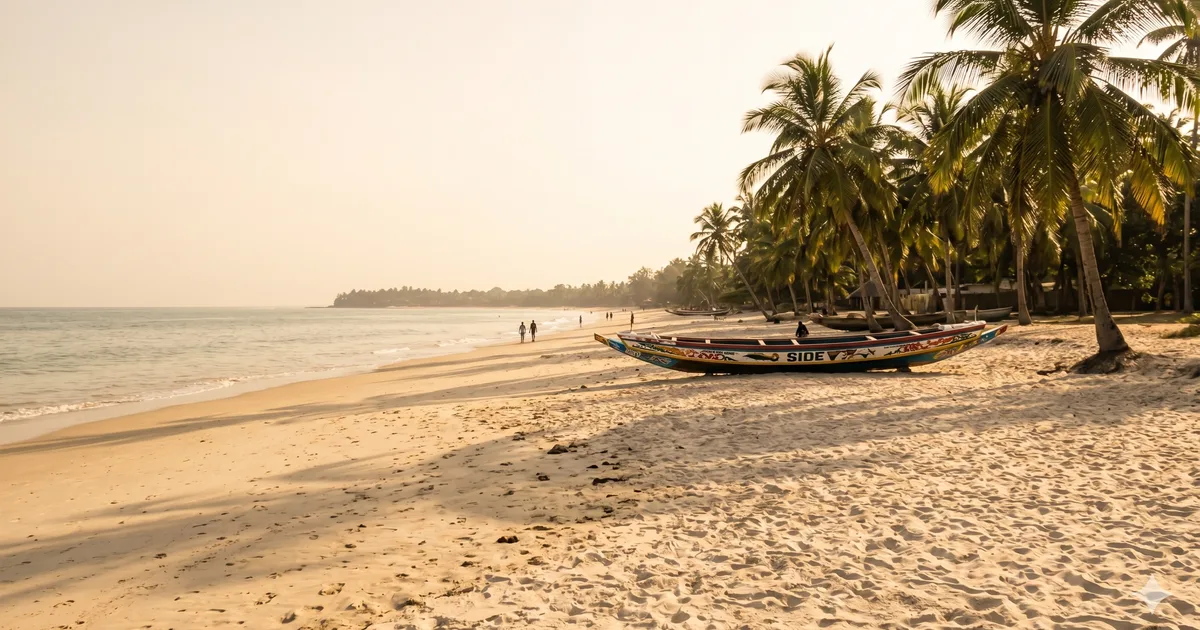
The golden-brown sand stretches almost unbroken from Banjul south to the Senegalese border at Kartong. Outside the Senegambia strip you can walk for an hour at Sanyang, Gunjur or Kartong and pass maybe a dozen people. The Atlantic here is rougher than the Mediterranean — respect the rip currents — but the big open skies and fishing-boat sunsets are hard to beat.
4. A serious food culture
Proper Gambian cooking is built around one-pot rice dishes simmered with fish, groundnut or palm oil: benachin, domoda, yassa, plasas. It is affordable, generous and rarely found in hotel buffets. Seek out the mid-afternoon lunch plates at women-run roadside canteens — this is where the country actually eats.
5. History that forces you to slow down
Kunta Kinteh Island (UNESCO-listed, formerly James Island) and the villages of Juffureh and Albreda sit roughly three hours upriver from Banjul. The island is tiny, eroding, and deeply sobering — you stand inside a ruined slave-holding cell and the wider transatlantic story stops being an abstraction. Do not skip it because it sounds heavy. Go.
6. It's genuinely friendly — with caveats
The "Smiling Coast" nickname is not invented. Strangers greet each other ("Salaam aleikum"/"Maleikum salaam"), children wave, conversations start easily. The flip side is the bumster — young men on the tourist strip who latch on offering guiding, girlfriends, cannabis, or just persistent friendship. A firm, polite "no thank you" and eye contact usually works. We cover this properly in the safety section below.
Best time to visit The Gambia (month by month)
The Gambia has two seasons: dry (roughly November–May) and rainy (June–October). Tourism collapses in the wet months, which is why almost everyone travels in European winter. Our month-by-month breakdown of when to visit The Gambia covers weather, festivals and typical flight prices in detail.
November — the sweet spot
Dry, warm (28–31 °C), low humidity, flight capacity ramping up but not full. Hotel rates are still shoulder-season. Birdlife is recovering after the rains. If you want the experience without Christmas prices, book for the second or third week of November.
December–January — peak season
This is the busiest and most expensive window. Charter flights fly full, the Senegambia strip is lively every night, and hotel rates rise 30–50% for the Christmas and New Year fortnights. Book 4–6 months ahead. Weather is flawless — dry, 27–30 °C, cool Harmattan mornings.
February — still perfect, a bit cheaper
Effectively peak weather without the Christmas premium. Good for birders (migrants still present) and for families travelling outside school holidays.
March–April — hotter, quieter, cheapest
Temperatures climb into the mid-30s. The Harmattan haze can dull the light. Hotels discount heavily from mid-March. Excellent if you prioritise empty beaches and value over postcard photography.
May — transitional
Hot, humid, the first storms start arriving late in the month. Not recommended for a first visit.
June–October — rainy season
Most charter flights stop. Hotels along the strip close for refurbishment. Birdlife is in fact spectacular during the rains, but logistics become harder, roads upcountry flood, and humidity is punishing. For specialist birders and writers, fine; for a beach holiday, no.
See also: Best time to visit The Gambia: month-by-month breakdown — our dedicated cluster guide with charts, festival dates and flight price tracking.
Getting there from the UK and Europe
Direct flights
TUI operates the main direct service from Gatwick and Manchester to Banjul International Airport (BJL), typically running November to April. Flight time is around 6 hours 10 minutes southbound, 6 hours 45 minutes northbound (against the jet stream). Seasonal charter capacity from other UK airports shifts year to year.
Return fares with baggage sit in the following bands for a standard two-week trip:
- Early November / mid-April: £420–560
- Late November / early December: £500–700
- Christmas/New Year: £800–1,200+
- February half-term: £650–900
Indirect options
- Brussels Airlines via Brussels — year-round, reliable, often cheaper for solo travellers outside peak
- Royal Air Maroc via Casablanca — decent connections from European hubs, longer total journey
- Turkish Airlines via Istanbul — useful from further afield
- Vueling — has operated seasonal direct flights from Barcelona
For flexible dates Brussels Airlines can come in at £380 return in shoulder season, at the cost of a 2–4 hour layover each way.
Airport transfers
Banjul airport is ~20 km from Kololi. Pre-booked hotel transfers run 900–1,500 GMD (£10–17). Official green taxis at the rank charge 1,200–1,800 GMD for the same trip. Yellow "bush taxis" are cheaper but not a sensible first-night choice with luggage. If you've booked via a UK tour operator, transfers are usually included.
Where to stay
Most first-time visitors base themselves on the short strip of coast between Bakau in the north and Bijilo in the south — roughly 12 km, containing almost all the hotels, restaurants and nightlife.
The neighbourhoods, compared
| Area | Vibe | Best for | Typical price (B&B, double, peak) |
|---|---|---|---|
| Kololi (Senegambia) | Lively, walkable strip, bars, restaurants, bumsters | First-timers, groups, nightlife | £70–140 |
| Kotu | Quieter, creek-side, shorter walk to beach | Birders, couples, older travellers | £55–110 |
| Bakau / Fajara | Residential, local feel, Atlantic-facing | Return visitors, walkers | £50–130 |
| Bijilo | Luxury end, next to forest park, fewer bumsters | Honeymoons, upscale trips | £150–320 |
| Cape Point | Headland, views into the river mouth | Quiet stays, good food | £70–180 |
| Upriver (Makasutu / Jahaly) | Eco-lodges, river, remote | Birders, splurge nights on a longer trip | £180–400 |
Our picks
Budget (£30–60 per night, double)
- [BOOKING_LINK: Bakotu Hotel, Kotu] — long-running, garden setting, five minutes from the beach, decent pool. Simple but well-kept.
- [BOOKING_LINK: Bungalow Beach Hotel, Kotu] — older but loyal following, direct beach access.
Mid-range (£60–130 per night, double)
- [BOOKING_LINK: Kairaba Beach Hotel, Kololi] — the Senegambia strip's anchor property. Big gardens, proper restaurants, lively but not rowdy.
- [BOOKING_LINK: Ngala Lodge, Fajara] — the foodie choice. Boutique, ocean-view suites, one of the best restaurants in the country.
- [BOOKING_LINK: Ocean Bay Hotel & Resort, Cape Point] — family-friendly, huge pool, good for multigenerational trips.
Luxury / boutique (£140+ per night, double)
- [BOOKING_LINK: Coco Ocean Resort & Spa, Bijilo] — the headline hotel. Moroccan-styled, spa-heavy, direct beach.
- [BOOKING_LINK: Mandina Lodges, Makasutu] — a night or two here, 40 minutes inland on stilts over the creek, is the best single splurge in the country. Sunrise paddle with Pied Kingfishers is worth the money.
- [BOOKING_LINK: Sandele Eco-Retreat, Kartong] — further south, solar-powered, brilliant for readers and birders.
If this is your first visit and you want the safety net of a walkable strip full of options, start in Kololi. If you're a return visitor and know what you want, Fajara or Bijilo.
Top things to do
1. Spend a morning at Abuko Nature Reserve
The country's oldest protected area, 20 minutes from Kololi. Monkeys (vervet, patas, western red colobus), crocodiles in the main pool, and something like 250 bird species. Go at opening, hire a guide at the gate (500–800 GMD), allow three hours.
2. Sail to Kunta Kinteh Island and Juffureh
A day trip of about 10 hours. Boat upriver from Banjul or Denton Bridge, visit Albreda and Juffureh (Alex Haley's Roots village), then the island itself. Sobering, important, and often includes lunch in a village compound. Not a "fun day out" — treat it as the trip's still point.
3. Walk the Kotu Creek bridge at dawn
Costs nothing. From about 6.45 am for an hour, the old wooden bridge is a bird hide — herons, kingfishers, hamerkops, egrets, occasionally a Goliath heron. Local bird guides hang around; 600–900 GMD for a proper hour's walk is fair.
4. A half-day at Makasutu Culture Forest
Mangrove paddle, savannah walk, palm-wine tapper demo, baboons, kingfishers. Touristy but genuinely well run. If your budget stretches, sleep over at Mandina Lodges the night before.
5. Eat lunch at Tanji fishing village
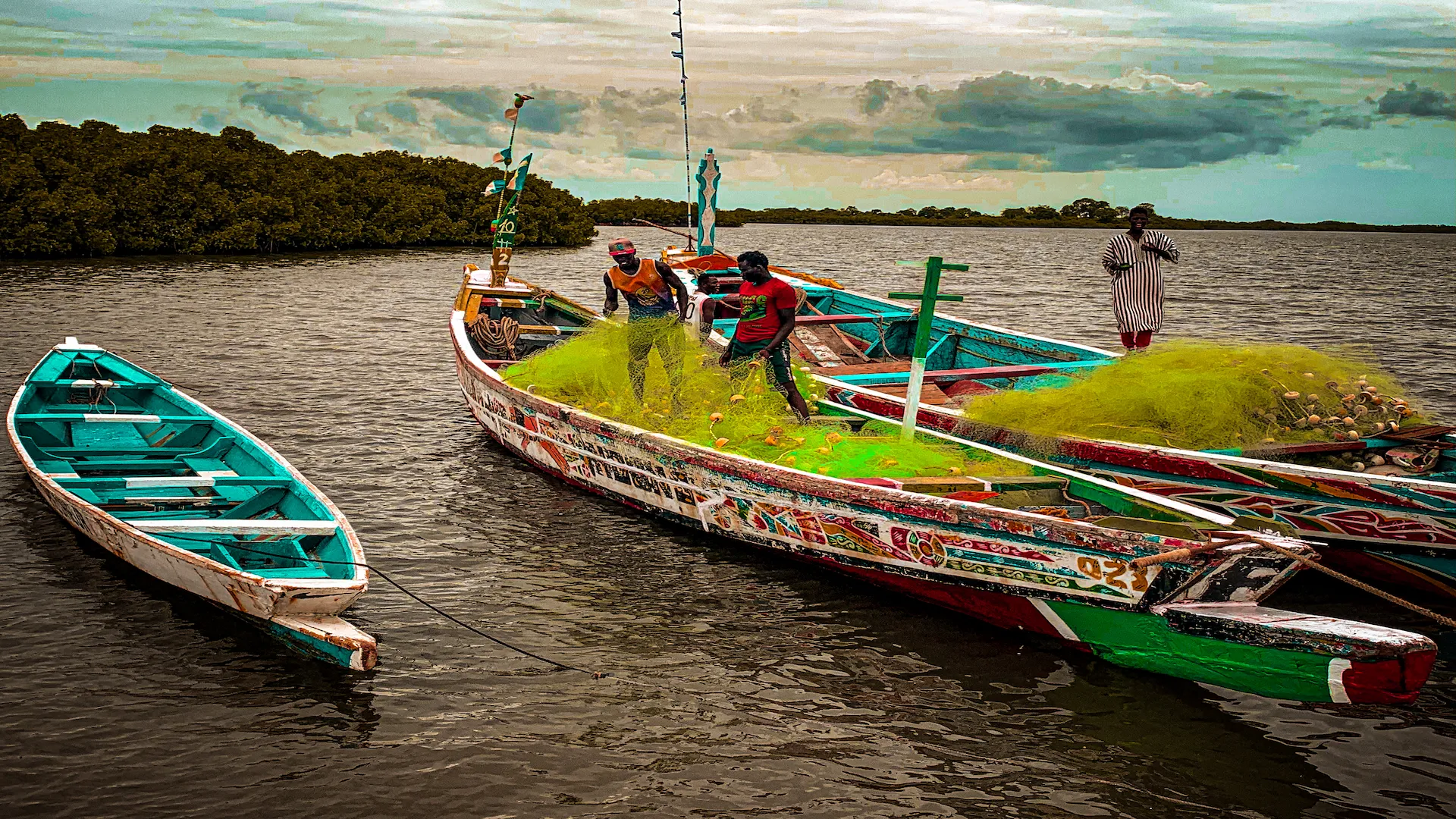
Around noon the painted pirogues come in and the beach turns into a working fish market. Go with a guide who can walk you through the smokehouses. Combine with Tanji Bird Reserve.
6. A river cruise to Lamin Lodge
Old mangrove jetty, lunch of grilled barracuda, bird-filled creeks on the way back. Half-day, achievable on any itinerary.
7. Bijilo Forest Park
On foot, in under two hours. Monkeys will take fruit from your hand if you let them — which you shouldn't. Good for families with younger children not ready for Abuko.
8. Wrestling match at Serrekunda or Bakau
Senegambian wrestling (lamb) is serious sport with drumming, mystic preparation and vast local crowds. Fights happen most weekends in season. Ask your hotel or Browse tours on Viator.
9. Buy a drum at Brikama
Or at least visit the craft market and the woodcarving street. Brikama's drum-makers are the real thing — ask to hear them before you choose.
10. Sanyang or Gunjur beach day
Pack into a taxi, spend the day at Rainbow Beach Bar or one of the Gunjur beach restaurants, walk for an hour in either direction, eat grilled fish. This is what the Gambian coast feels like away from the hotels.
11. Wassu Stone Circles (upriver, 2-day trip)
1,200-year-old megalithic burial circles, UNESCO-listed, six hours east of Banjul. Worth it if you're staying 10+ days and want to see the interior.
12. Cross into Senegal for a night in Saly or Toubab Dialaw
Border crossings at Karang/Amdallai are straightforward. Saly is a bigger, more French-speaking resort; Toubab Dialaw is the artists' village with the famous Espace Sobo Badé. Browse tours on Viator
13. Watch sunset from Cape Point
Where the Gambia River meets the Atlantic. The light is remarkable. Most hotels there have a sunset terrace; Ngala Lodge's is the one to aim for even if you're not staying.
14. Take a Gambian cooking class
Learning to make proper domoda or yassa from scratch is an underrated half-day. Browse tours on Viator
15. Early morning at Pirang Forest or Kartong bird observatory
Serious birders only — specialist guides required. Kartong Bird Observatory at the southern border is a gem.
Food and drink
Gambian food is built on rice, fish and groundnut, with occasional meat and heavy seasoning. It is flavourful, often slow-cooked, and almost never spicy-hot in the chilli-pepper sense — the heat comes from pepper sauces on the side. For a deeper guide to eating in Senegambia — restaurants by price band and a menu Wolof glossary — see our dedicated food guide.
The dishes you must try
- Benachin — the Gambian jollof. Red rice simmered with fish or meat, tomato, chilli and vegetables. Wolof version, called thiéboudienne across the border in Senegal, is almost identical and is arguably the national dish of both countries.
- Domoda — groundnut (peanut) stew with lamb, beef or chicken, served over rice. Creamy, slightly sweet, deeply savoury.
- Yassa — onions slow-cooked in lemon, mustard and stock until they collapse, served over grilled chicken or fish. The side-long cousin of a proper French onion dish.
- Plasas — leafy green stew with palm oil and smoked fish, served over rice.
- Afra — grilled spiced meat (lamb or goat), wrapped in bread with onion and mustard. Street food at its best. Eat it at Kairaba Avenue after dark.
- Bonga fish — smoked Atlantic shad, strong and salty, the anchovy of the region.
Where to eat
- Ngala Lodge, Fajara — the country's finest restaurant, changing menu, proper wine list.
- Butcher's Shop, Fajara — old-fashioned bistro, big crowd of expats.
- Yok Ghana, Kololi — the best West African food on the strip, go at lunch.
- Clay Oven, Kololi — serious Indian cooking, a welcome break from rice-and-fish.
- Boss Lady, Bakau — women's cooperative, authentic Gambian lunch plates for 150–250 GMD.
- Paradise Beach Bar, Sanyang — grilled fish lunch with your feet in the sand.
Drinks
JulBrew is the local lager — cold, unfussy, drinkable. Palm wine (mbour) is worth trying once, ideally at source. Wonjo (hibiscus), baobab and ginger drinks are sold on every corner — £0.30 a bag. Tap water: no. Bottled water is cheap and universal.
Etiquette
- Eat with the right hand if sharing a communal bowl. The left is not used for food.
- Greet before transacting. "How are you?" / "How is the family?" is a routine, not an intrusion.
- Tipping in restaurants: 10% where service isn't included, round up in local cafés.
Getting around
Green tourist taxis are your default on the strip. Agree the price before you get in. Typical fares:
- Kololi to Kotu: 400–600 GMD
- Kololi to Banjul: 1,000–1,500 GMD
- Kololi to airport: 1,200–1,800 GMD
- Day hire with driver: 4,000–6,500 GMD
Yellow "bush taxis" (shared) are much cheaper — 25–75 GMD for most urban hops — but require local knowledge and confidence. Fine once you've been there a few days.
Gele-gele minibuses run fixed routes at 10–30 GMD a ride. Cheap and authentic; slow and full.
Self-drive is possible but not recommended for first-timers. Roads outside the tourist area are unmarked, police checkpoints are frequent, and fuel stations scarce upcountry.
Ferries across the river at Banjul–Barra are the classic route to Senegal via Karang. They run hourly-ish and take 45 minutes on paper, longer in practice.
For anything upriver — Janjanbureh, Wassu, Basse — take an organised tour with overnight stops. DIY is possible but chews up days.
Budget for The Gambia
Prices below are per person per day, assuming shared accommodation on a twin-share basis.
| Level | Accommodation | Food | Transport | Activities | Daily total |
|---|---|---|---|---|---|
| Shoestring | Guesthouse £15–20 | Local canteens £6–10 | Gele-gele £2 | Free/self-guided £5 | £28–40 |
| Mid-range | 3★ resort B&B £30–45 | Restaurants £12–18 | Taxis £6–10 | One tour £15–25 | £55–90 |
| Comfortable | 4★ half-board £60–90 | Hotel + Ngala Lodge £25–35 | Private driver £15–20 | Bird guide/tour £25–40 | £110–170 |
| Luxury splurge | Coco Ocean/Mandina £150+ | Anywhere £40+ | Private car £25+ | Private guide £60+ | £240+ |
A "typical" first-timer on a TUI package with a few excursions lands around £65–80 per day on the ground, on top of their flight-and-hotel cost.
Safety, health, money and connectivity
Safety
The Gambia is one of West Africa's safer countries for tourists. Violent crime is very rare. The recurring issue is the bumster — young men on the tourist strip offering guiding, companionship, cannabis, or claiming to remember you from the hotel. They are not dangerous. They are relentless. Short responses: clear eye contact, a firm "no thank you, brother", keep walking. Do not get drawn into long conversations. Do not accept "just a tour of my village" from a stranger.
Beach theft is opportunistic — don't leave phones on the sand. Withdraw smaller amounts of cash more frequently.
Health
- Yellow fever certificate is officially required; carry it.
- Malaria is present year-round; take prophylaxis. Speak to a travel clinic six weeks before flying.
- Hepatitis A, typhoid, tetanus boosters are routinely recommended.
- Water — drink bottled or filtered only, including for brushing teeth if you are at all cautious.
- Sun — the latitude is 13°N; burn times are short. Bring proper SPF; reef-safe brands are sensible. Pack well before you fly — our Gambia packing list covers medications, clothing, electronics and money by season.
Money
The Gambian dalasi (GMD) is a closed currency — you cannot buy it outside the country. Bring GBP or Euros; change on arrival at the airport bureau de change (reasonable rate) or a high-street bureau in Kololi (slightly better). Avoid street changers.
ATMs are reliable in Kololi, Kotu, Bakau, Fajara and Banjul. Withdrawal limits are low (about 5,000 GMD per transaction). Take a back-up card.
Mid-range hotels accept Visa/Mastercard; smaller places are cash-only. Tipping is appreciated but not expected.
Connectivity
Local SIMs from Africell or QCell cost £2–4 with generous data bundles. Bring an unlocked phone. WiFi at most mid-range hotels is adequate for messaging and email, not for streaming or video calls. Upriver coverage is patchy.
Sample itineraries
3 days — a long weekend
Base yourself in Kotu or Kololi. This is enough time to understand the country, not explore it.
Day 1 — Arrive at Banjul, transfer to hotel, afternoon on the beach. Sundowner at Ngala Lodge's terrace in Fajara.
Day 2 — Dawn walk along Kotu Creek bridge with a local bird guide. Breakfast at the hotel. Half-day at Makasutu Culture Forest — mangrove paddle, baboons, palm-wine tasting. Evening drinks and a late afra wrap on Kairaba Avenue.
Day 3 — Morning at Abuko Nature Reserve, lunch at Lamin Lodge, afternoon at Brikama craft market or the beach. Final dinner at Yok Ghana or Butcher's Shop. Fly home overnight or next morning.
Realistic on-the-ground spend (mid-range): £180–260 per person excluding flights.
7 days — the standard first visit
A week lets you add the river and one big day trip, without rushing.
Days 1–2 — Settle in Kololi or Kotu. Beach, pool, Kotu Creek at dawn, dinner at Ngala Lodge.
Day 3 — Abuko in the morning, Bijilo Forest Park in the afternoon, sunset at Cape Point.
Day 4 — Full day to Kunta Kinteh Island, Juffureh and Albreda. You will be tired and thoughtful at the end of it. Early night.
Day 5 — Day trip south: Tanji fishing village, Tanji Bird Reserve, lunch at Paradise Beach Bar in Sanyang. Long walk on the beach.
Day 6 — Overnight upriver at Mandina Lodges, Makasutu — the single best night of most trips. Sunrise paddle.
Day 7 — Back to the strip, final shopping at Brikama or Kairaba Avenue, dinner and flight.
Realistic spend: £380–600 per person on the ground.
14 days — the proper trip
Two weeks allows a Senegal leg and serious upcountry time.
Days 1–3 — Bakau/Fajara base. Abuko, Bijilo, bird guiding, ease in.
Days 4–5 — Mandina Lodges at Makasutu. Paddle, walk, read.
Days 6–7 — Kunta Kinteh Island trip (overnight in Banjul) and river cruise.
Days 8–9 — Upriver overland to Janjanbureh and Wassu Stone Circles. Eco-lodge stay. Chimpanzees at Baboon Islands if you add a boat.
Days 10–11 — Back down, cross the river at Banjul–Barra and drive to Saly, Senegal, via Kaolack. Two nights of French-speaking Atlantic.
Day 12 — Day trip to Lac Rose (Pink Lake) and return to Saly.
Day 13 — Drive back to The Gambia, last night at a southern beach — Sandele at Kartong or Footsteps at Gunjur.
Day 14 — Final morning, airport.
Realistic spend: £950–1,450 per person on the ground, depending on splurges.
Frequently asked questions
Is The Gambia safe for tourists?
Yes, with caveats. Violent crime against tourists is rare; the recurring irritation is bumsters on the tourist strip. Common sense — don't flash cash, don't walk beaches alone at night, keep an eye on valuables — covers most situations. UK Foreign Office advice should be checked before travel.
Do UK citizens need a visa for The Gambia?
UK passport holders can currently enter visa-free for up to 90 days for tourism. This changed in recent years — always verify directly via gov.uk within a month of travelling.
Is The Gambia cheap?
Yes for a European winter-sun destination. A mid-range couple will spend less here than in the Canary Islands on food, taxis and excursions, though all-inclusive resort pricing can climb. Shoestring and backpacker budgets work easily outside December.
Can I use British pounds in The Gambia?
Some hotels, drivers and craft sellers accept GBP or Euros, but the rate will be against you. Change money into dalasi on arrival and use cash for everything outside mid-range hotels.
Is it safe to drink the water?
Tap water in hotels is treated but not recommended. Bottled water is cheap — 30–40 GMD for 1.5 litres. Ice in established restaurants is generally fine; roadside juice vendors less so.
What are bumsters and how should I handle them?
Unofficial guides, touts and self-appointed companions who work the tourist strip. They are not criminals and not dangerous in the usual case. A firm, friendly "no thank you, I'm fine" with eye contact, then keep walking, resolves 95% of encounters. Avoid giving a name or hotel; avoid promising to "see them later". If a bumster is ever genuinely aggressive, step into any hotel or restaurant — the staff will handle it.
What should I wear?
On the beach and in hotels, standard resort wear. Away from the tourist strip — in Banjul, Serrekunda, upriver — cover shoulders and knees. The Gambia is a majority-Muslim country and modesty is appreciated, particularly on Fridays and around mosques.
Is The Gambia good for solo travellers?
Yes, especially women travelling alone, who will get less hassle than in many Mediterranean destinations. Expect to be adopted into conversations and invited for tea. Solo male travellers will get the full attention of the bumster economy — manage expectations.
Can I combine The Gambia with Senegal?
Easily. The land border at Karang/Amdallai is straightforward with a UK passport, and organised trips to Casamance (southern Senegal), Saly and Dakar run from all the major Gambian operators. Add at least 3 nights for a meaningful Senegal leg.
What's the food like if I'm vegetarian?
Workable but not brilliant. Most traditional dishes are fish- or meat-based, though groundnut stew can be made without meat and there's always grilled vegetables, salads and imported options at the mid-range restaurants. Vegans should pack snacks and lower expectations.
Related guides — dive deeper
Best time to visit The Gambia — A month-by-month breakdown with festival dates, rain probability charts and typical flight prices. Read this second, after you've narrowed your interest.
Gambia vs Cape Verde: which is better for winter sun? — A direct comparison on flight time, price, weather, beaches, food and things to do. Written for travellers who've done the Canaries and want the next step.
The Gambia packing list — What to bring, what to leave, what to buy locally. Includes the bird-guide tip sheet and a sun-kit checklist for the 13°N latitude.
Eating like a local: a beginner’s guide to Senegambian food — A proper eating guide, with restaurant recommendations by price band and a glossary of menu Wolof and Mandinka.
Birdwatching in The Gambia: a first-timer's guide — Hotspots, guides, seasons, target species, with printable checklists.